
Bring your notes
Drop in any Markdown.
Drag a .md file onto your desk and it’s a note — headings, checklists and all.
Try it in the demo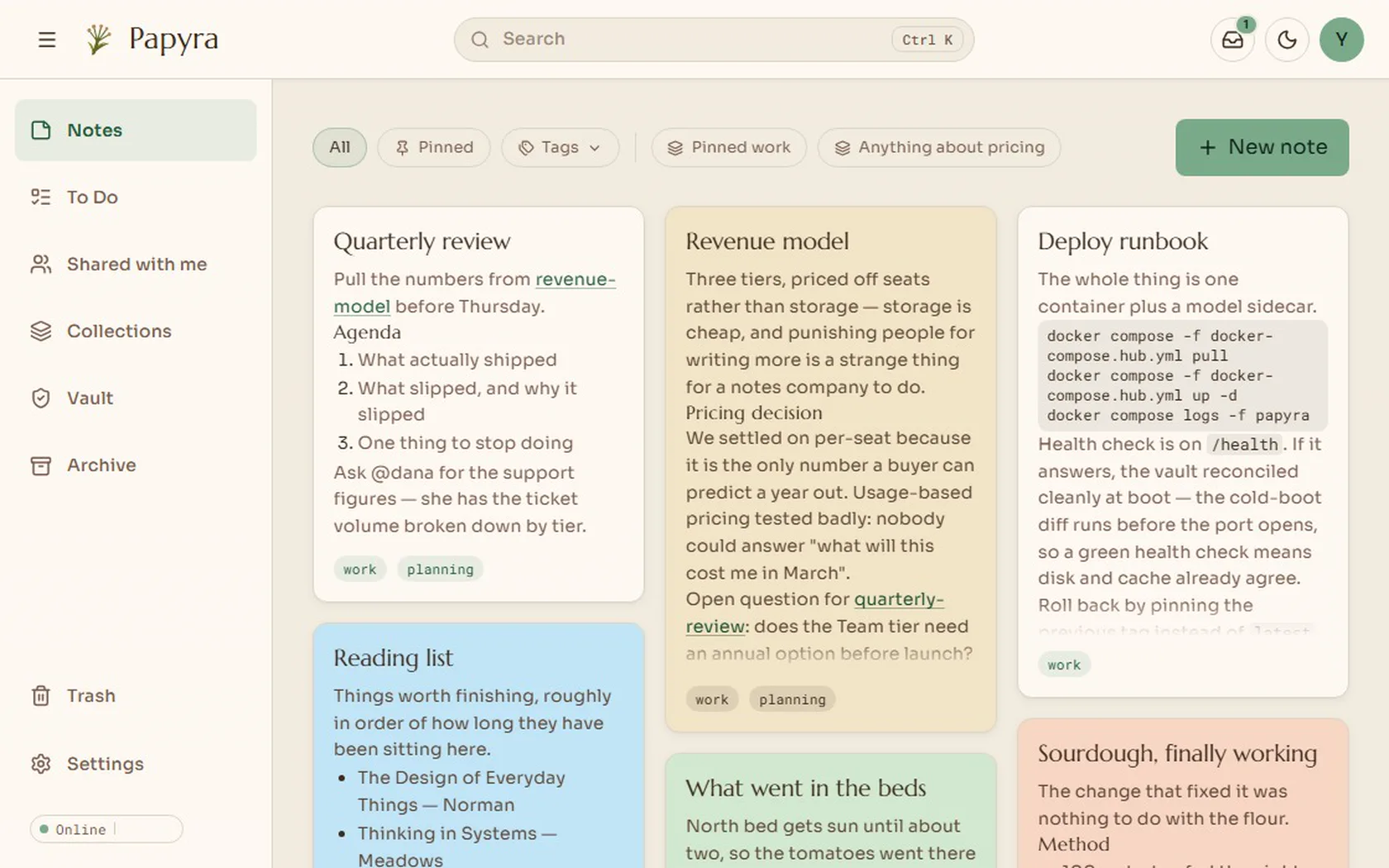
Papyra 1.0 · Free and open source
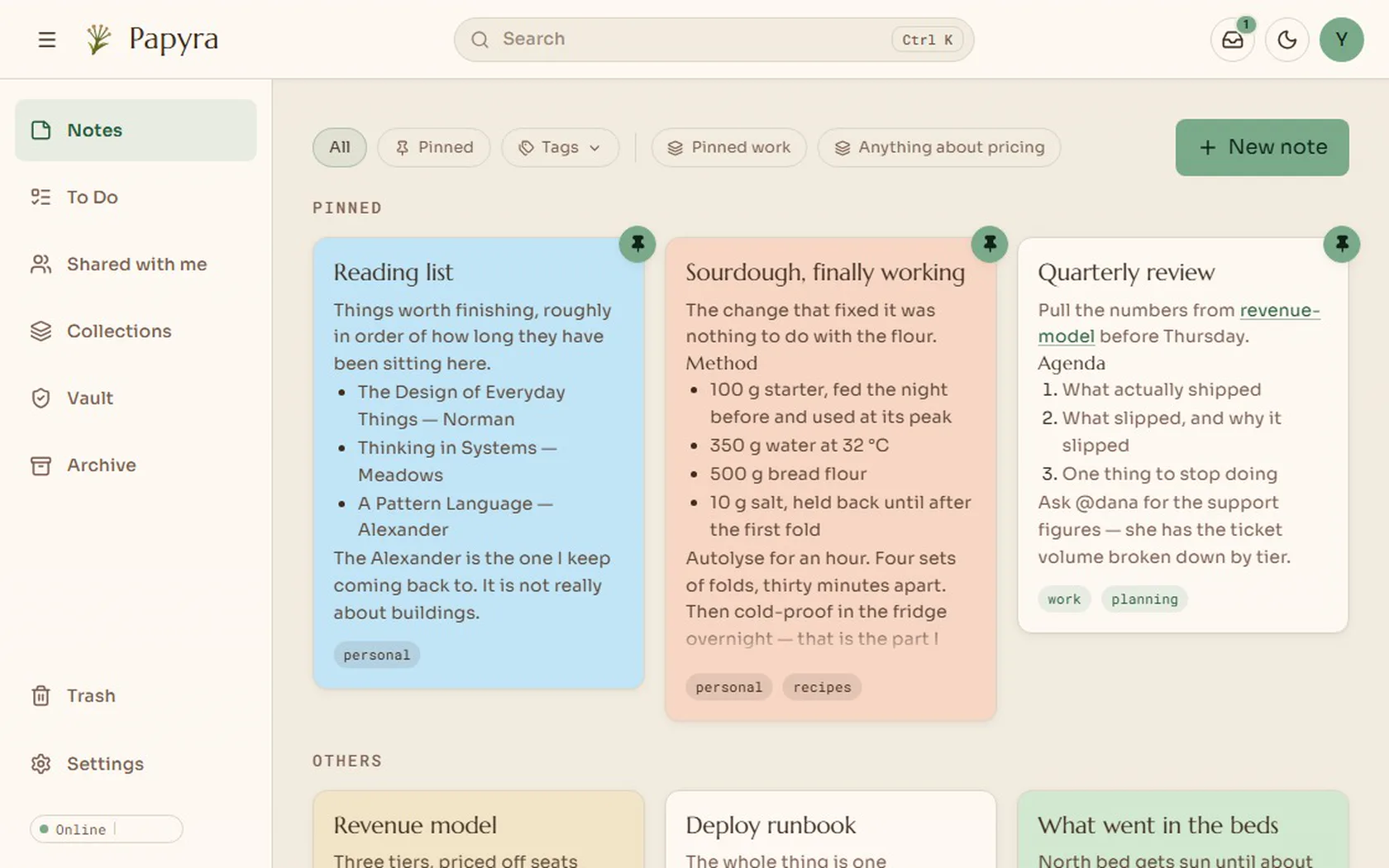
A calm, self-hosted notes app — as easy as sticky notes, as deep as a wiki. Every note stays a plain Markdown file on your own server.
No sign-up. The demo runs entirely in your browser.
Made for writing
Bring your notes
Drag a .md file onto your desk and it’s a note — headings, checklists and all.
Try it in the demoWrite
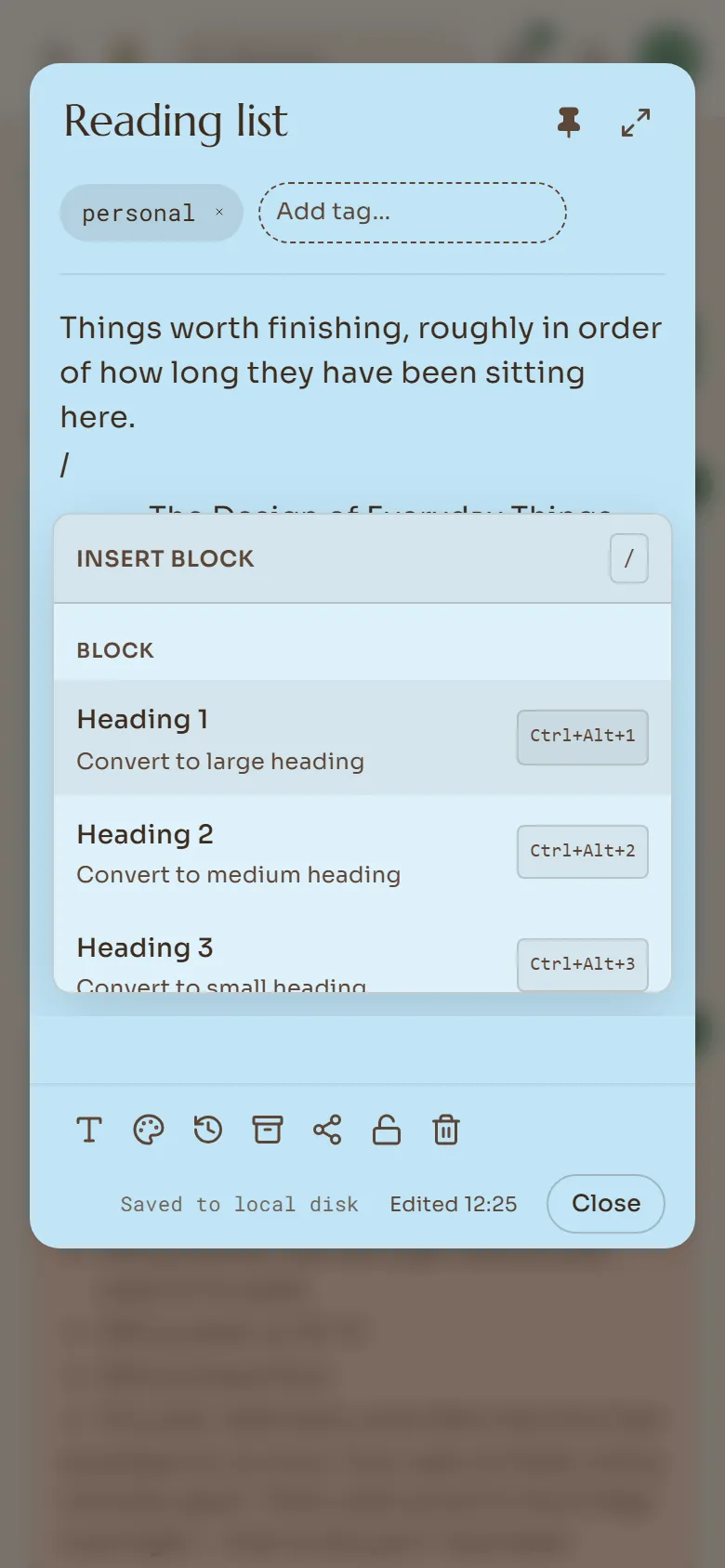
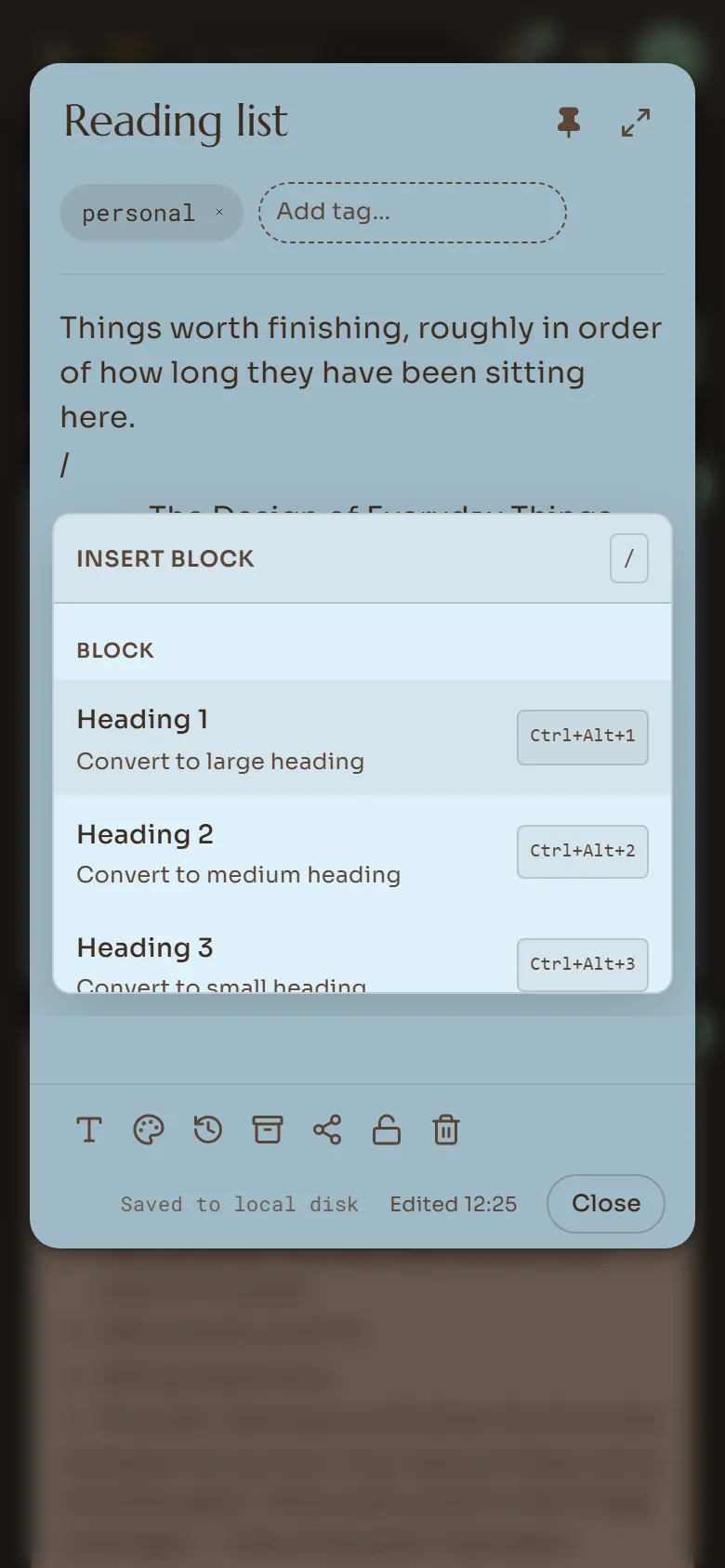
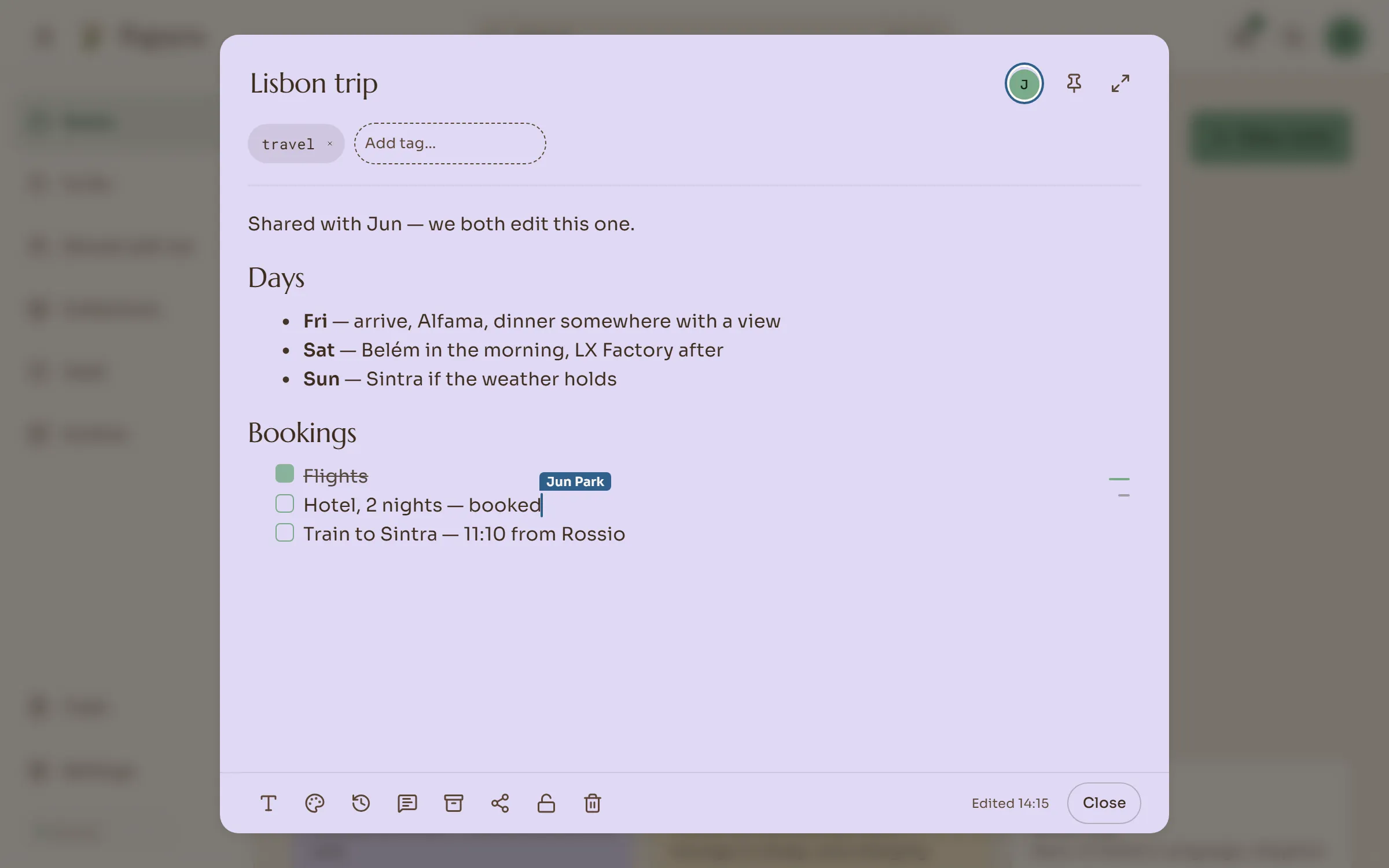
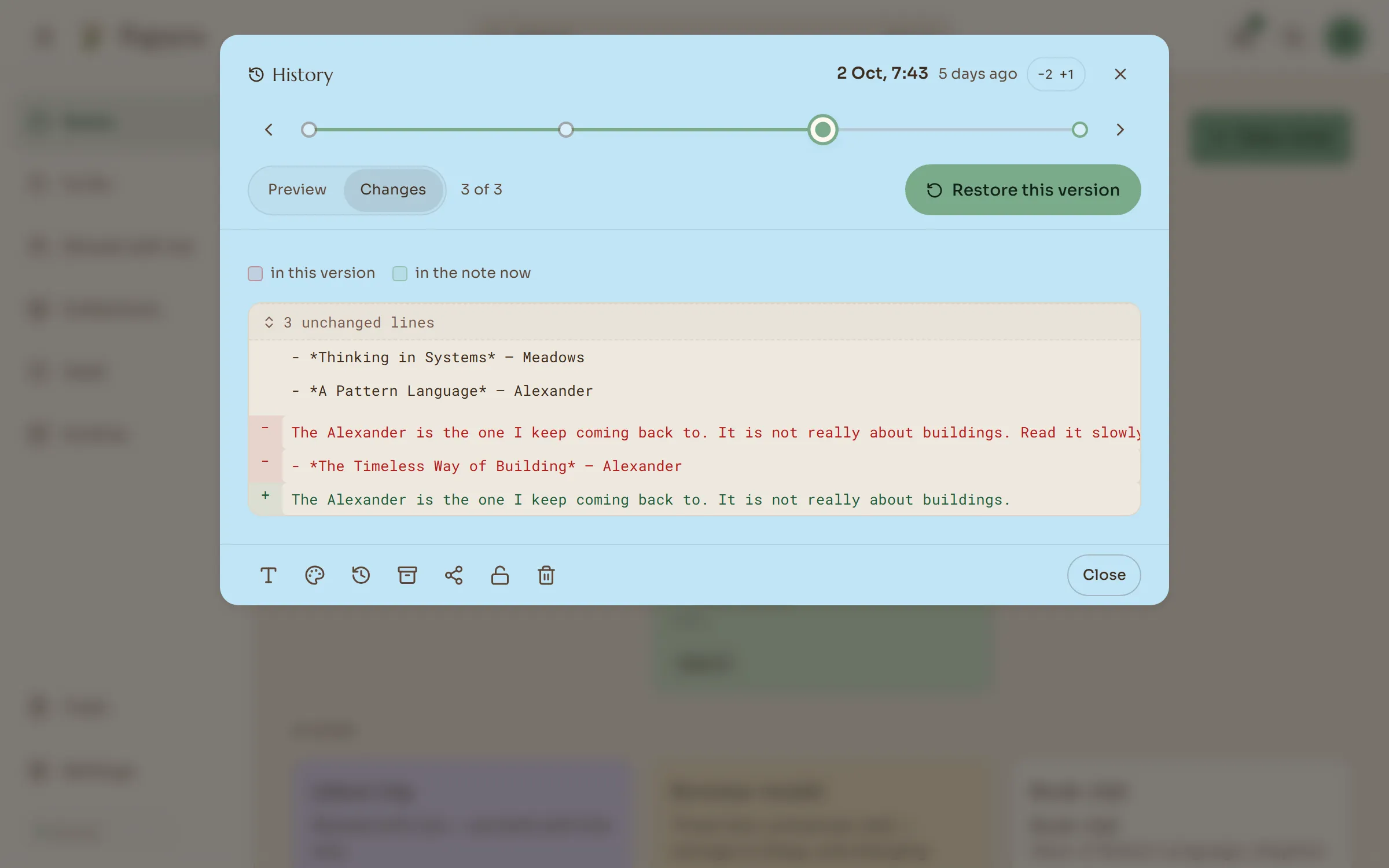
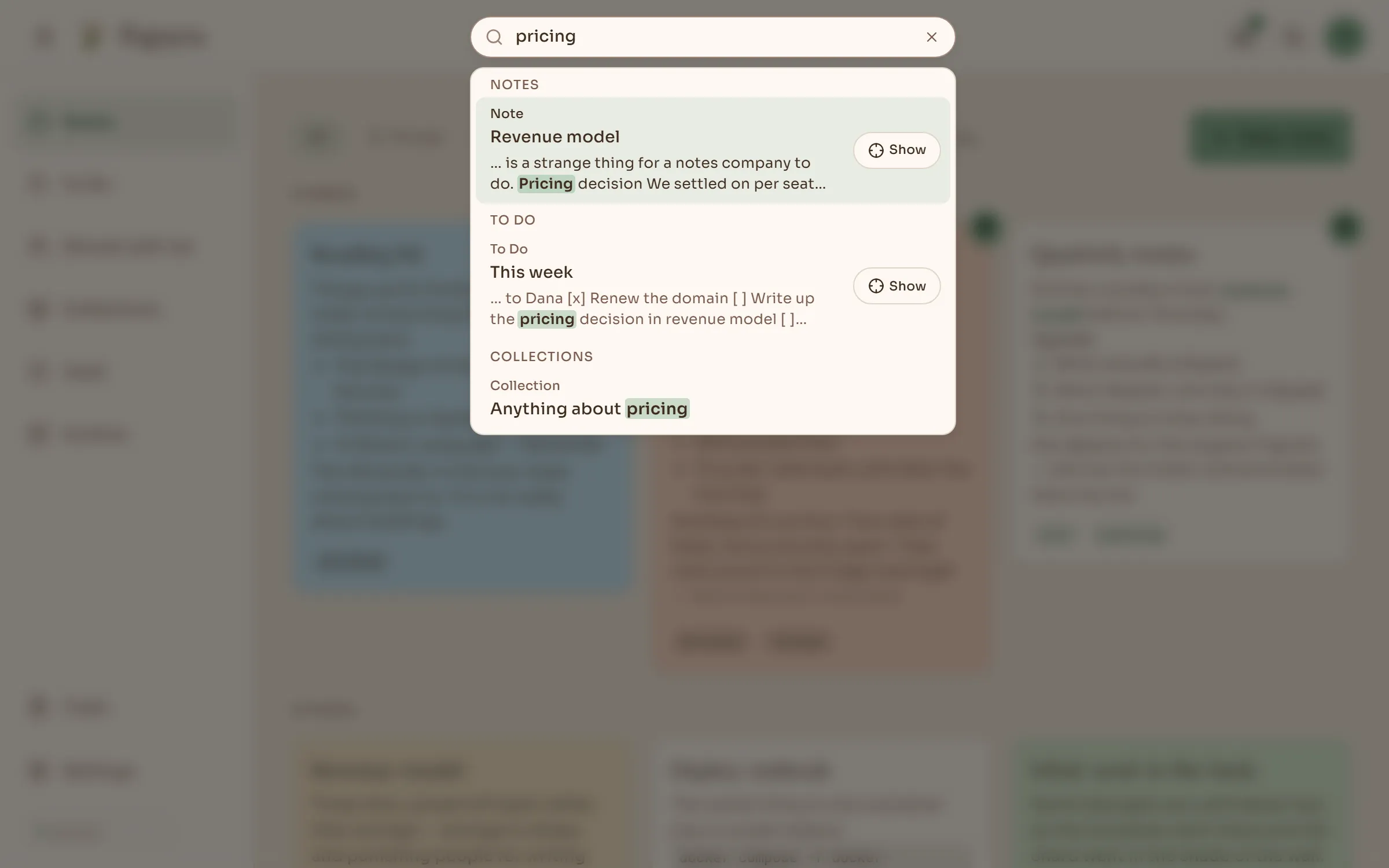
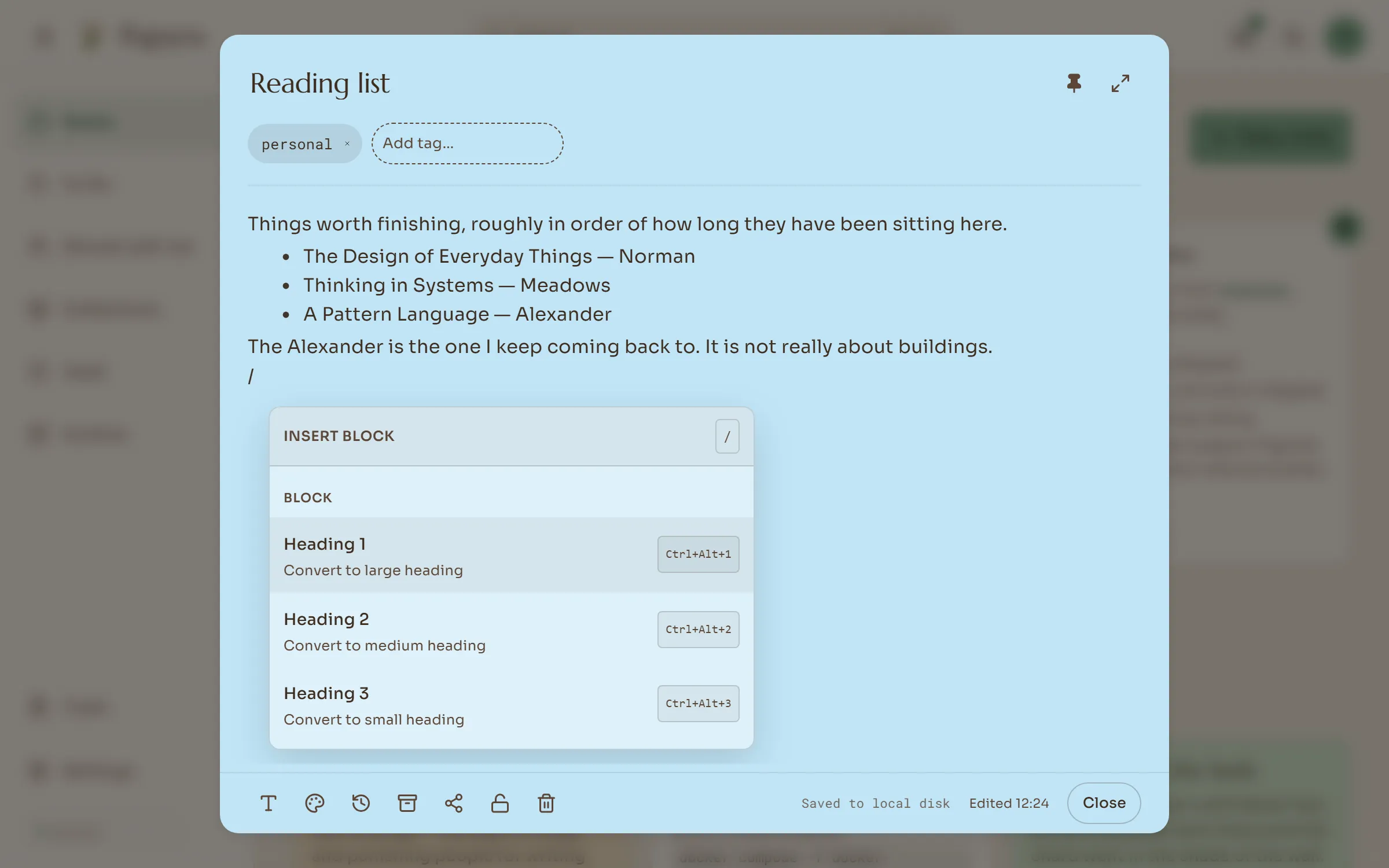
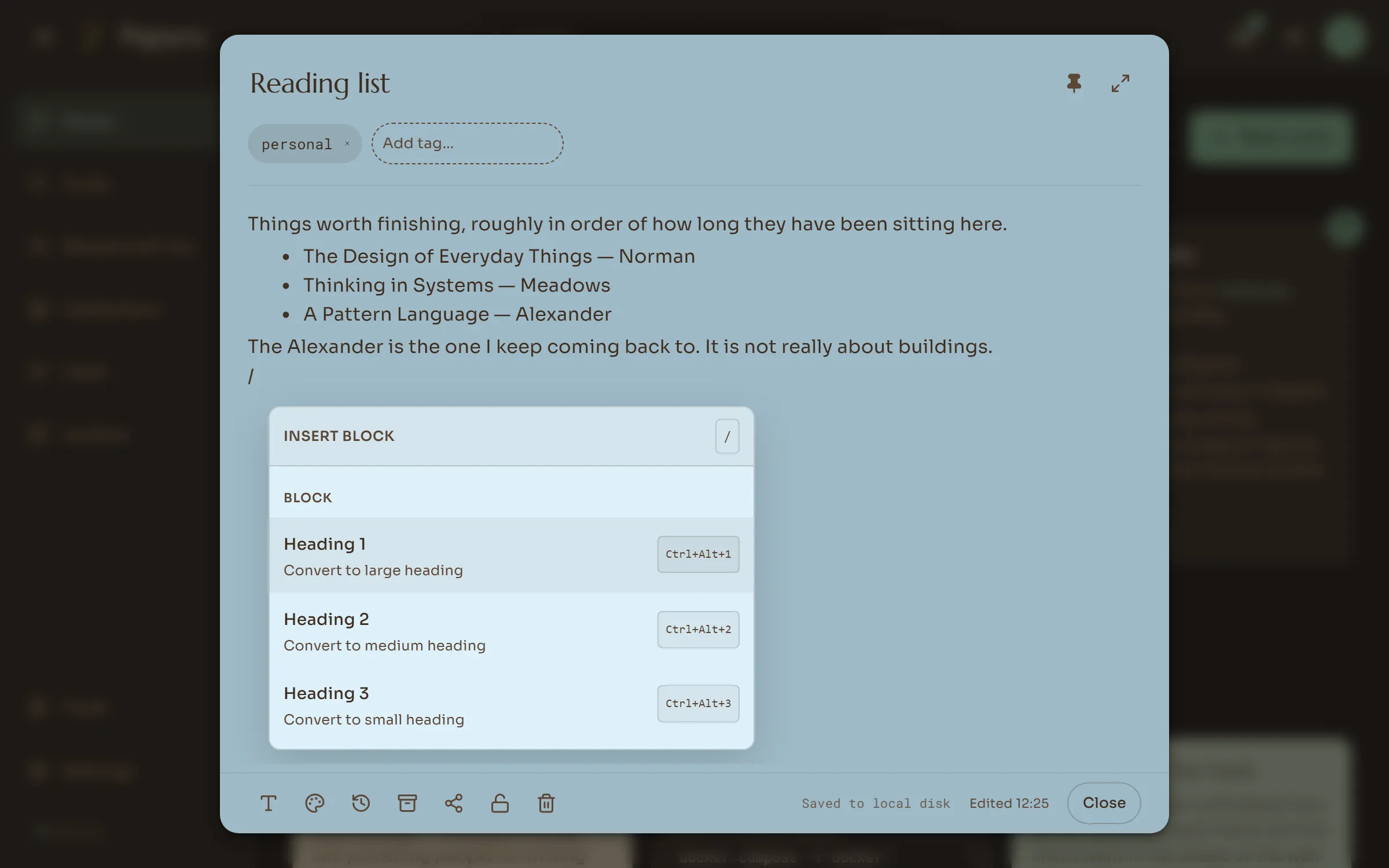
No save button, ever. Type / for headings, checklists, tables, maps and more — or [[ to link another note. Every version is kept, so you can always go back.
Find
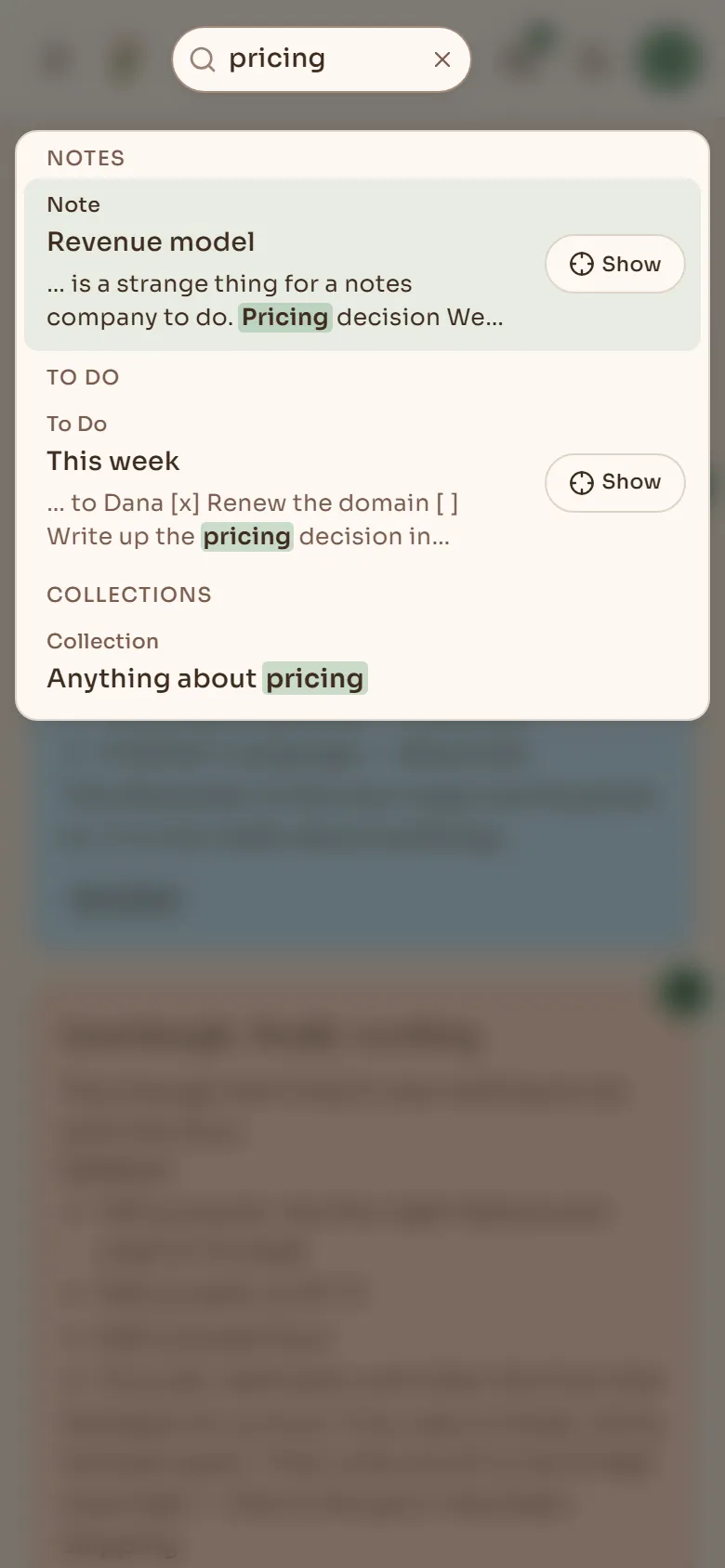
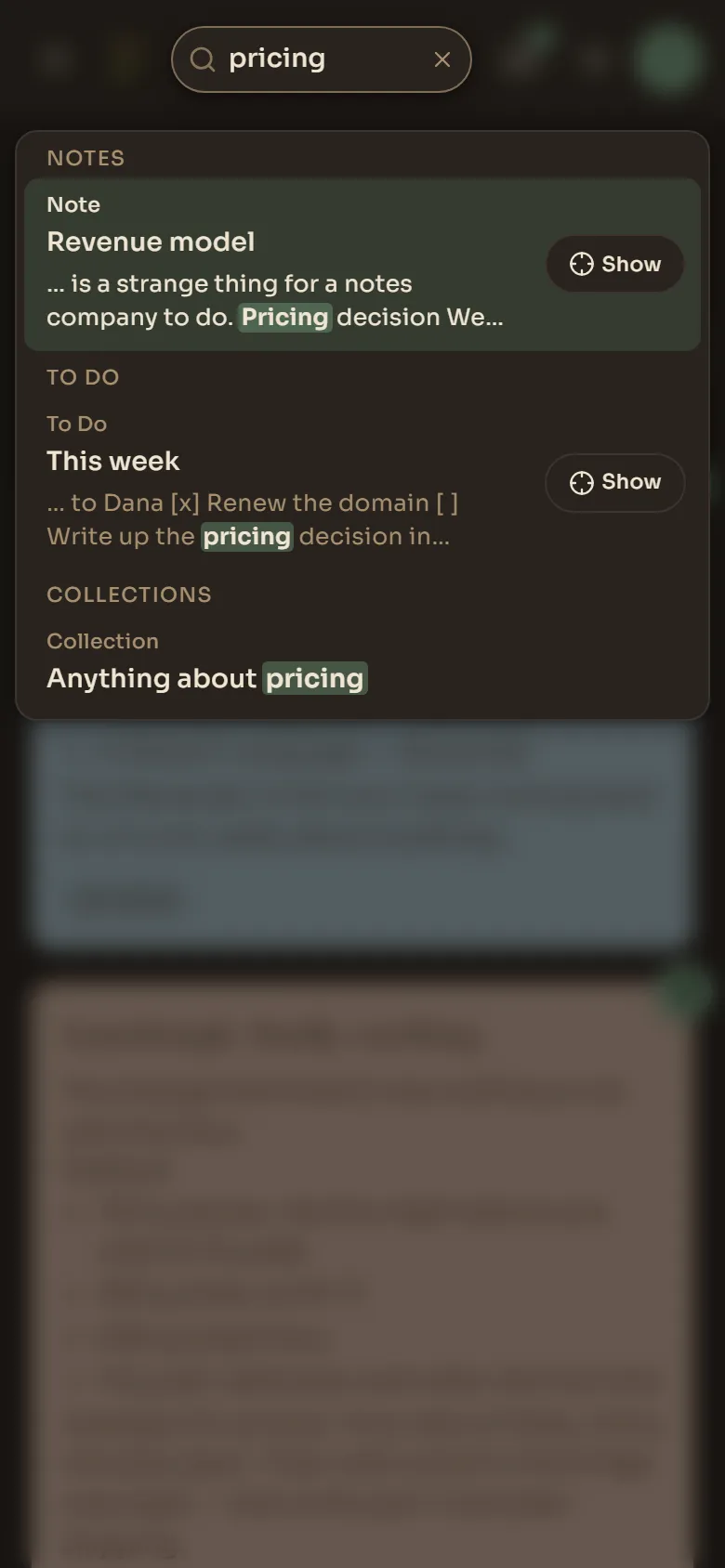
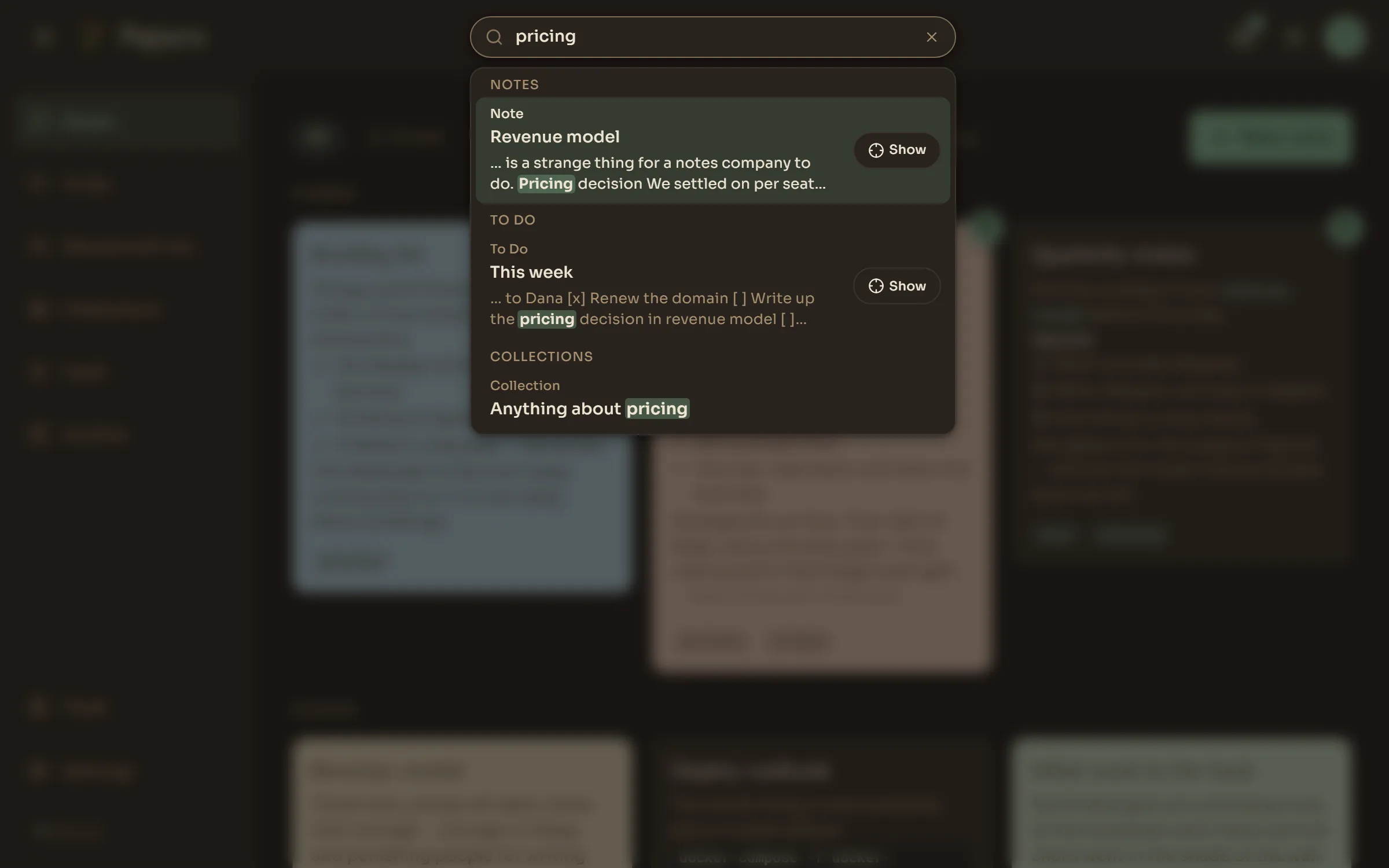
Press Ctrl K. Every word of every note, to-do and collection — matches highlighted.
Protect
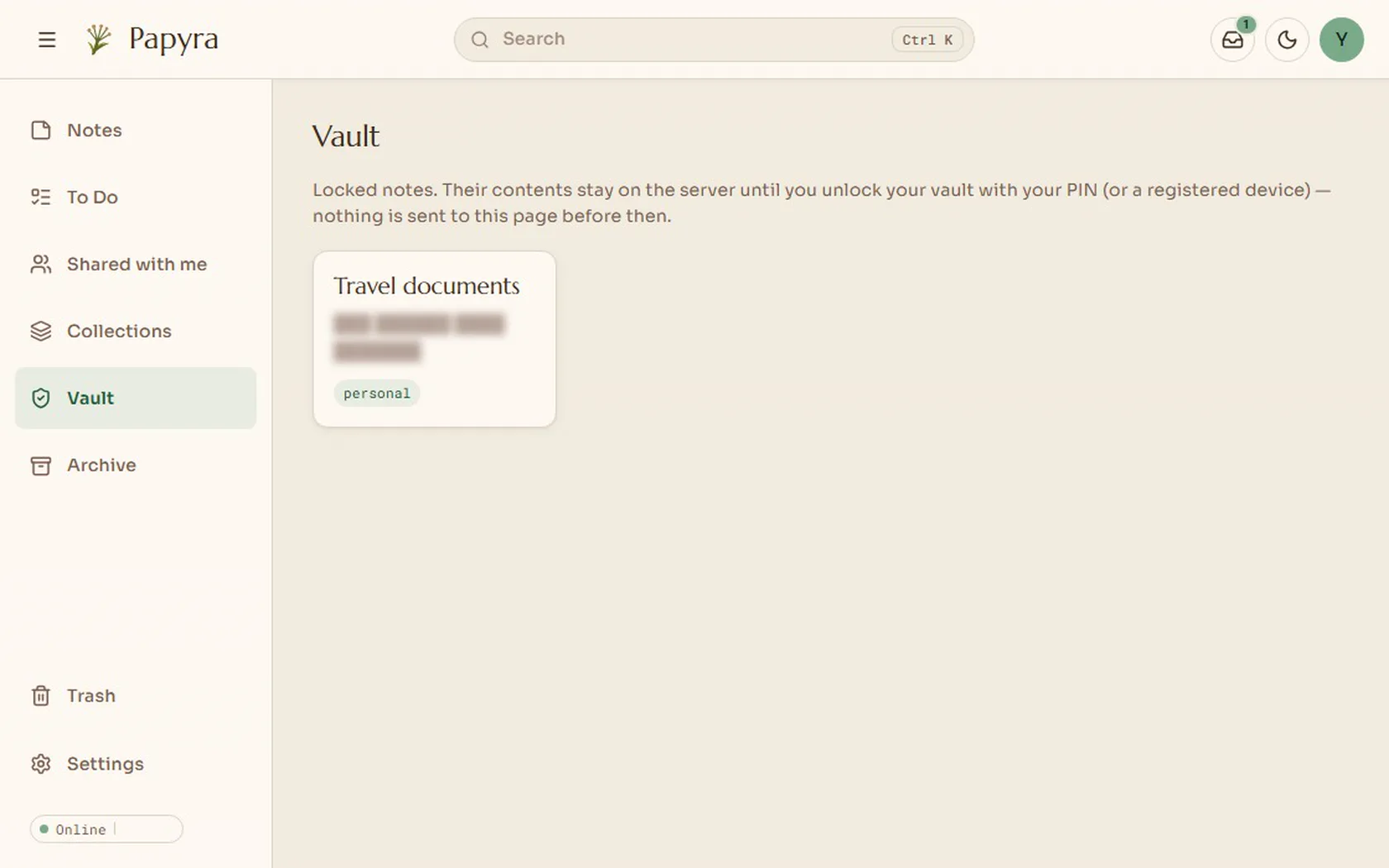
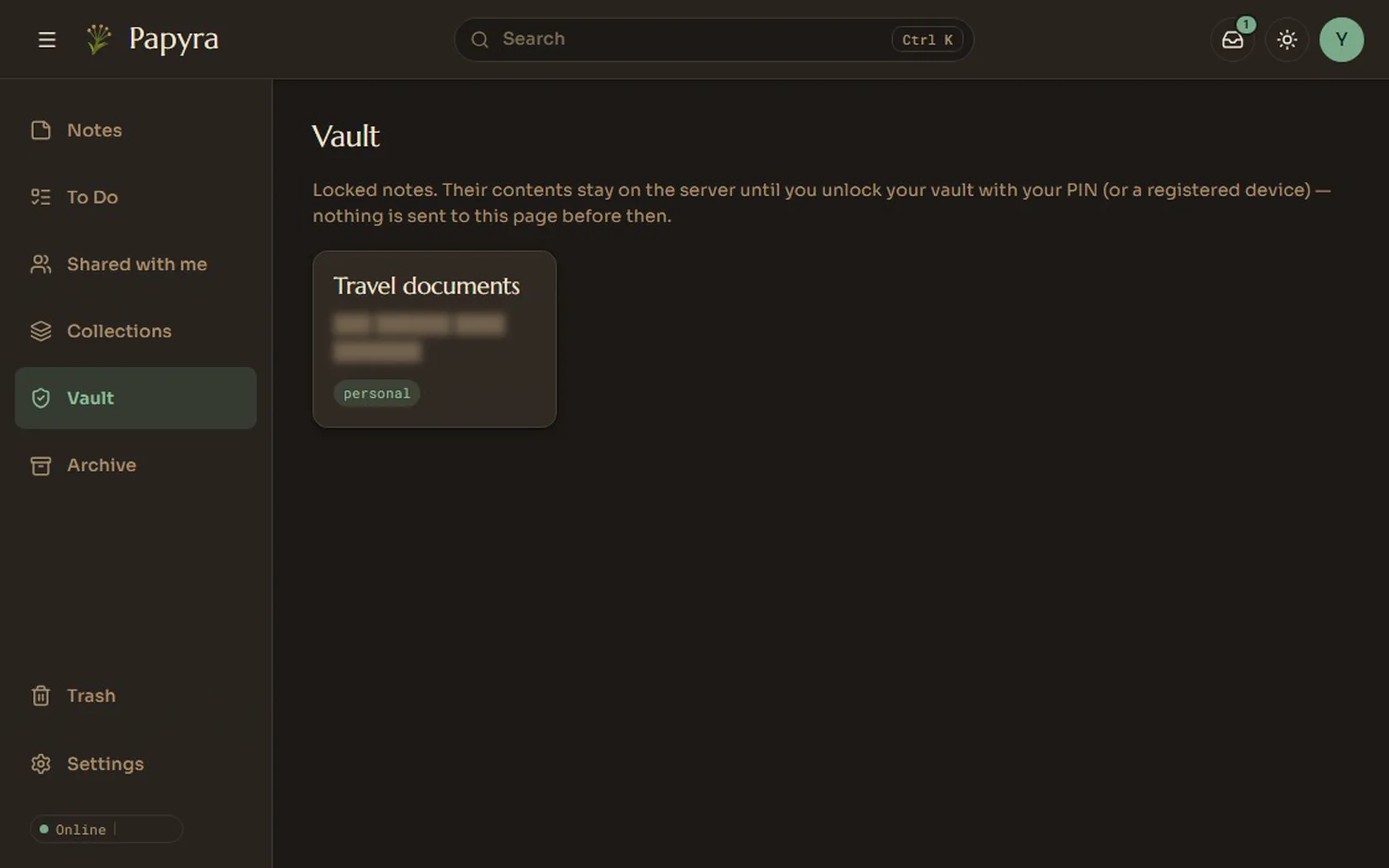
Locked notes are encrypted on disk and open only with your PIN — or your fingerprint.
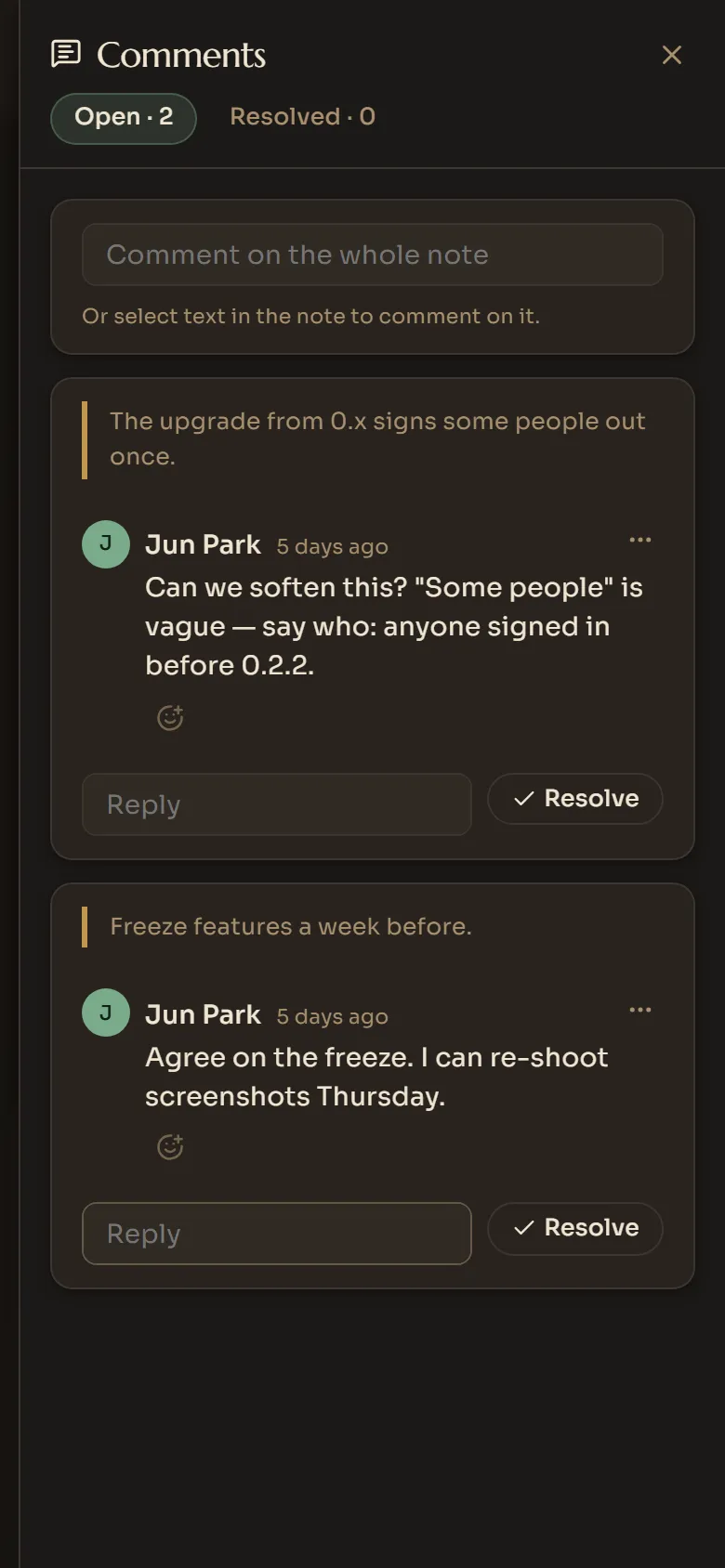
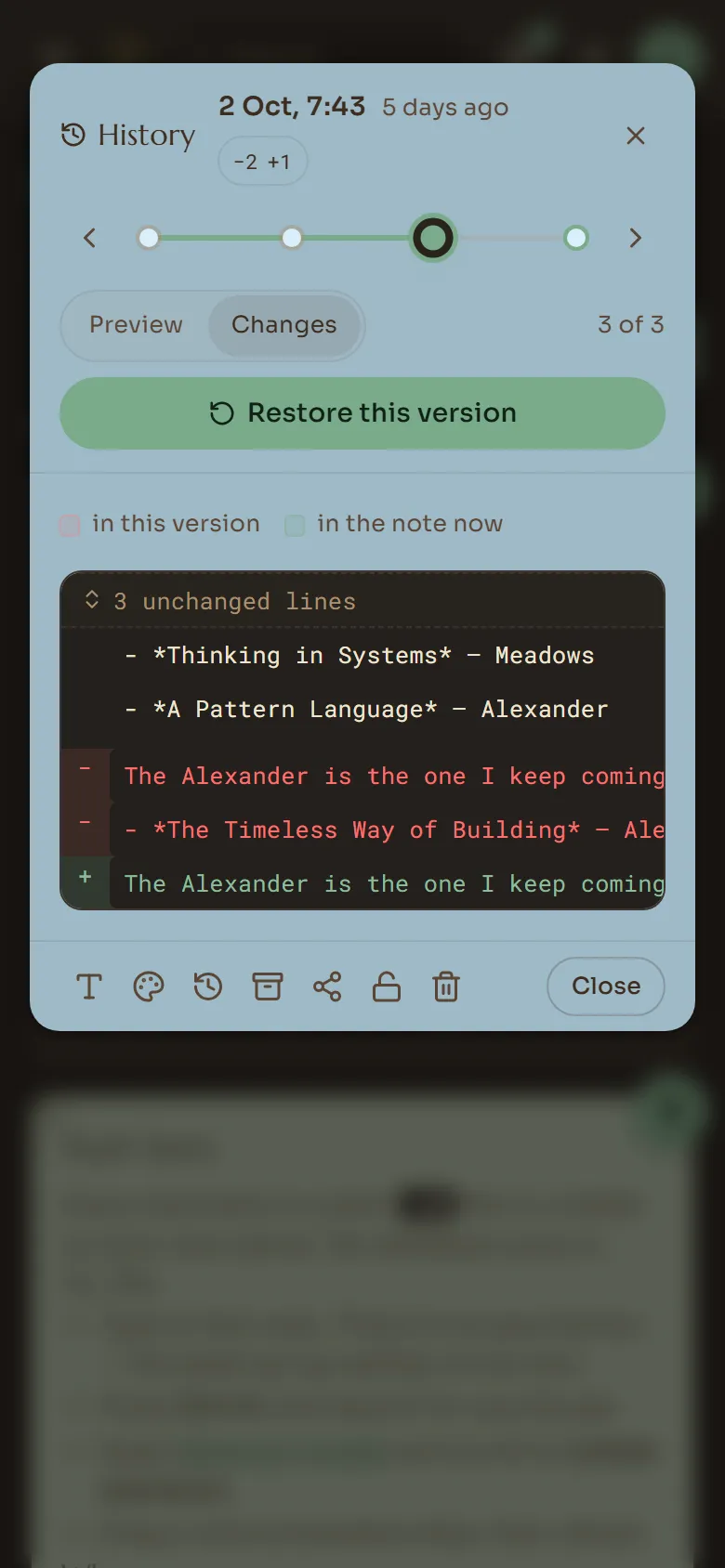
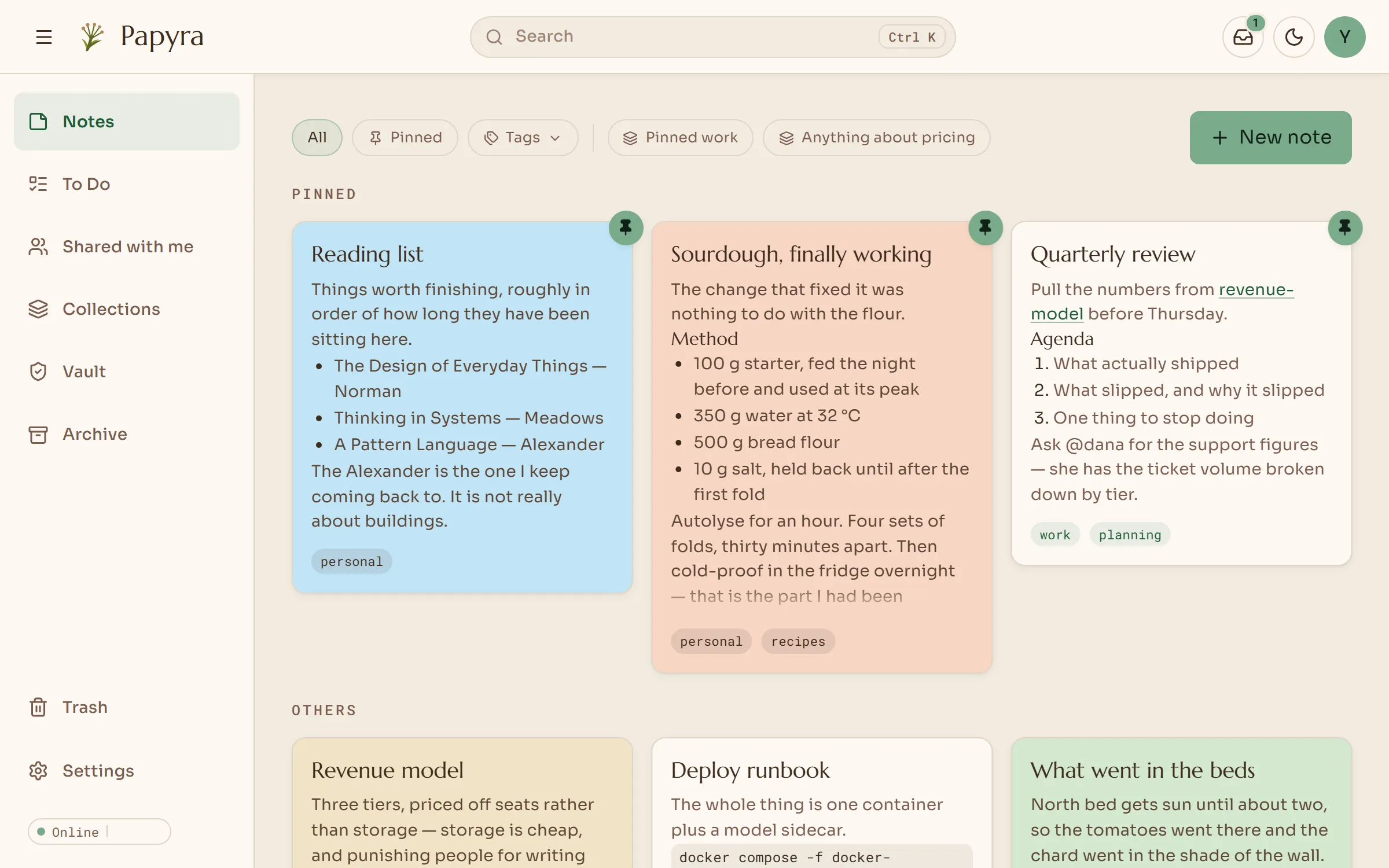
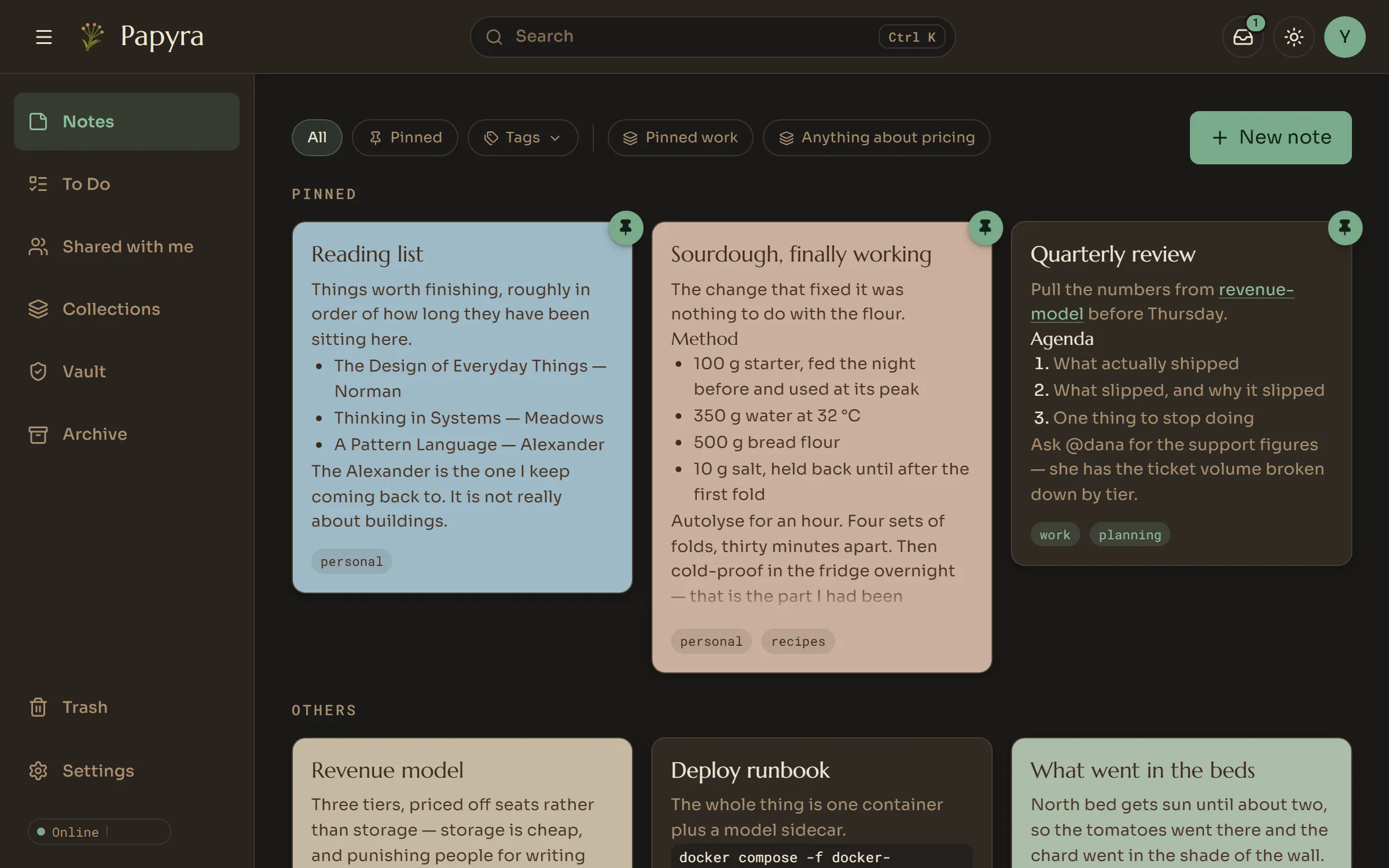
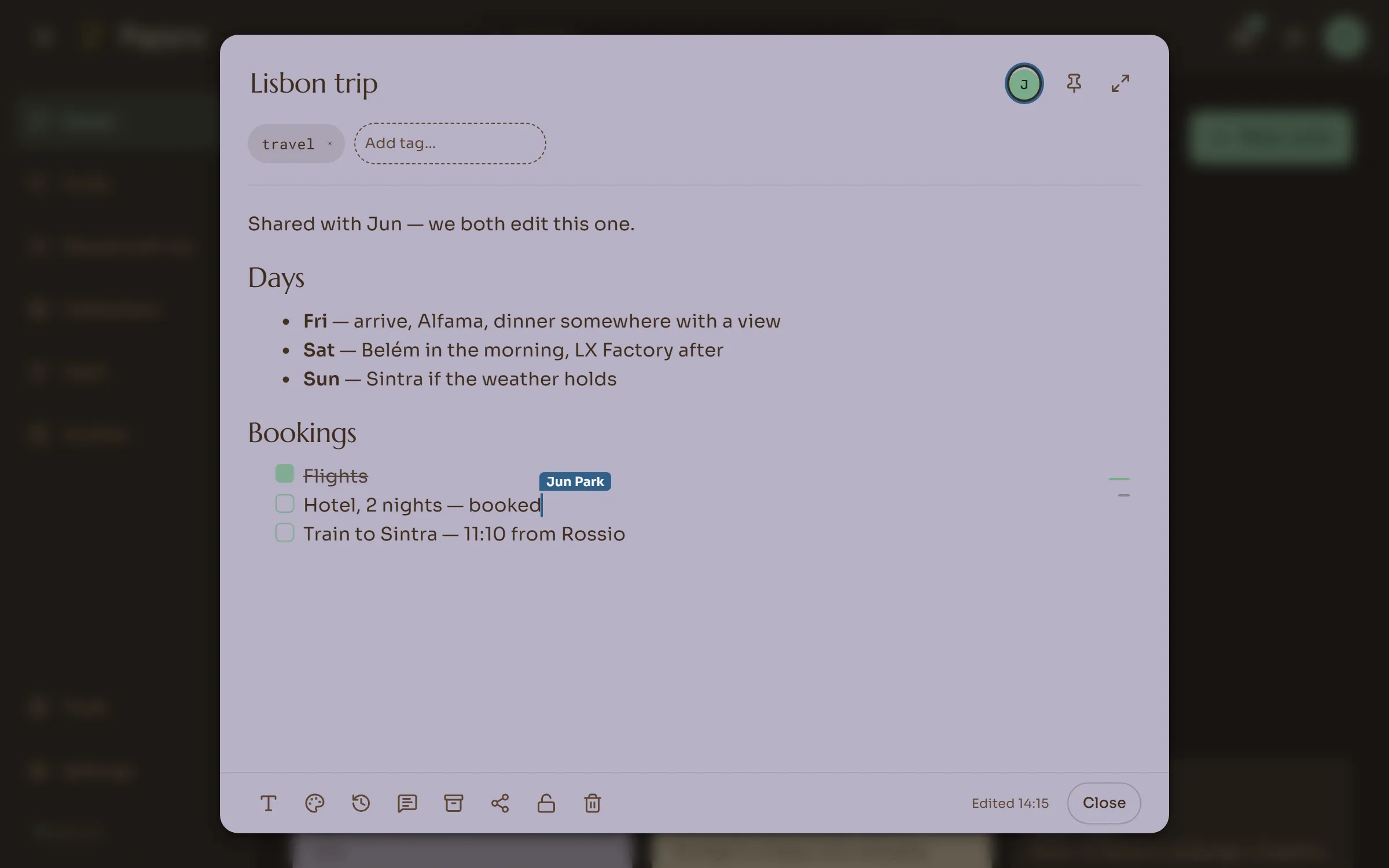
Day and night
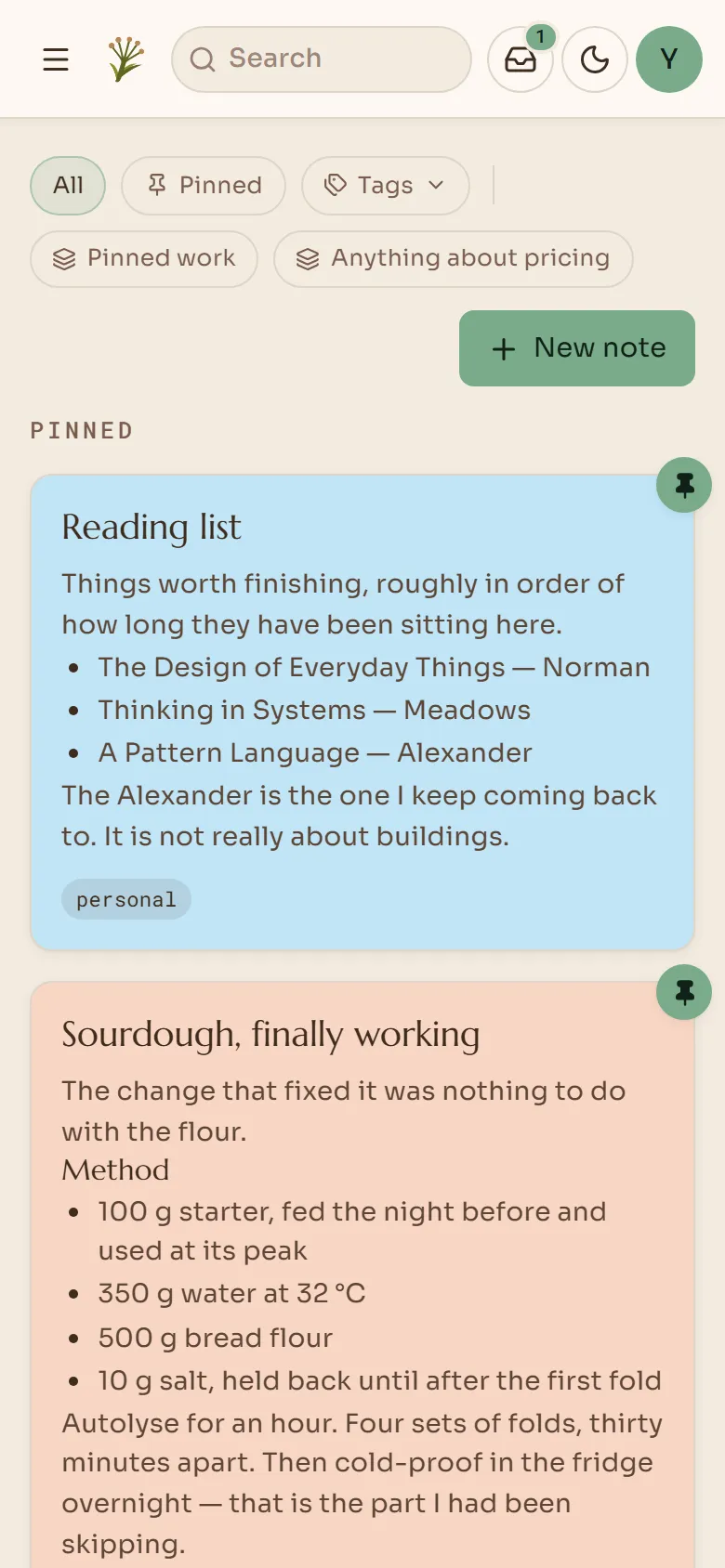
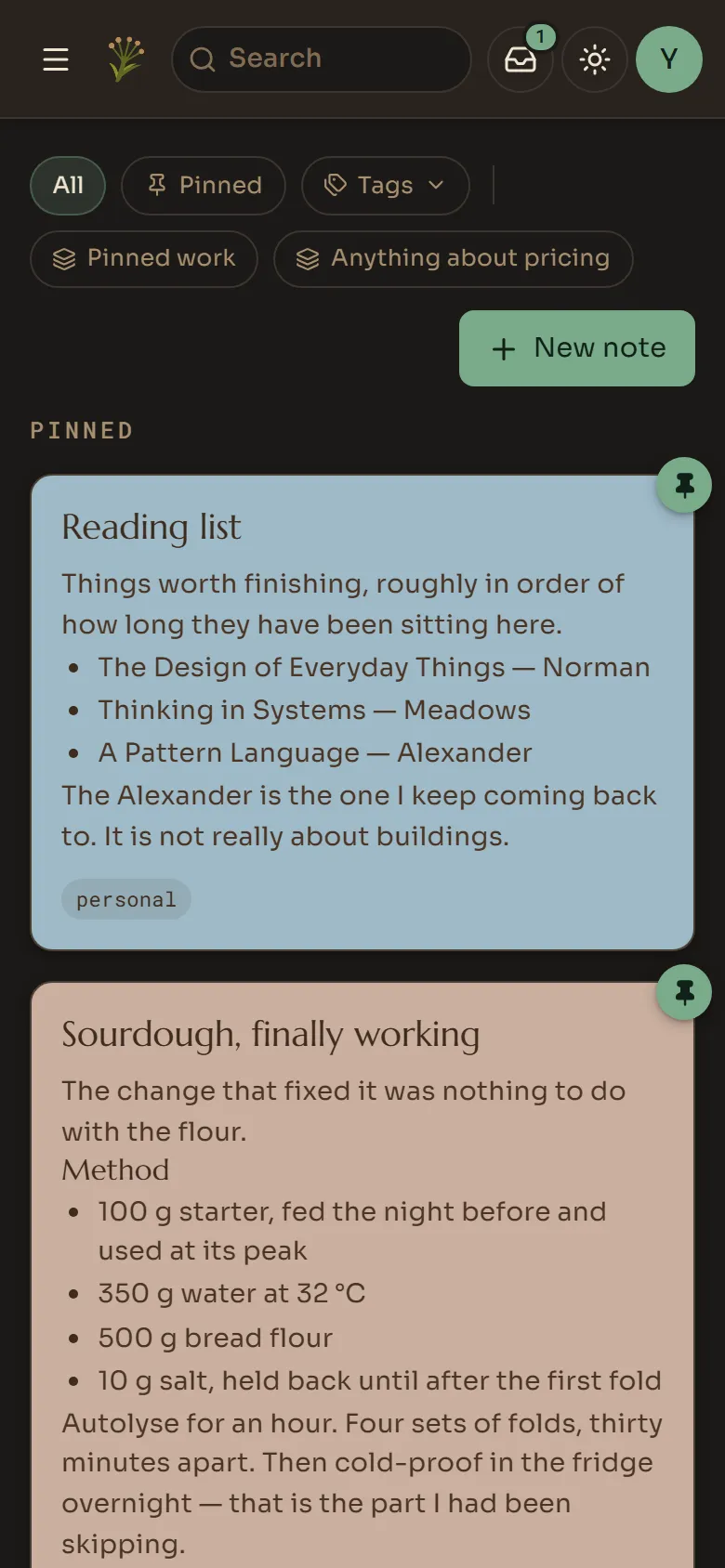
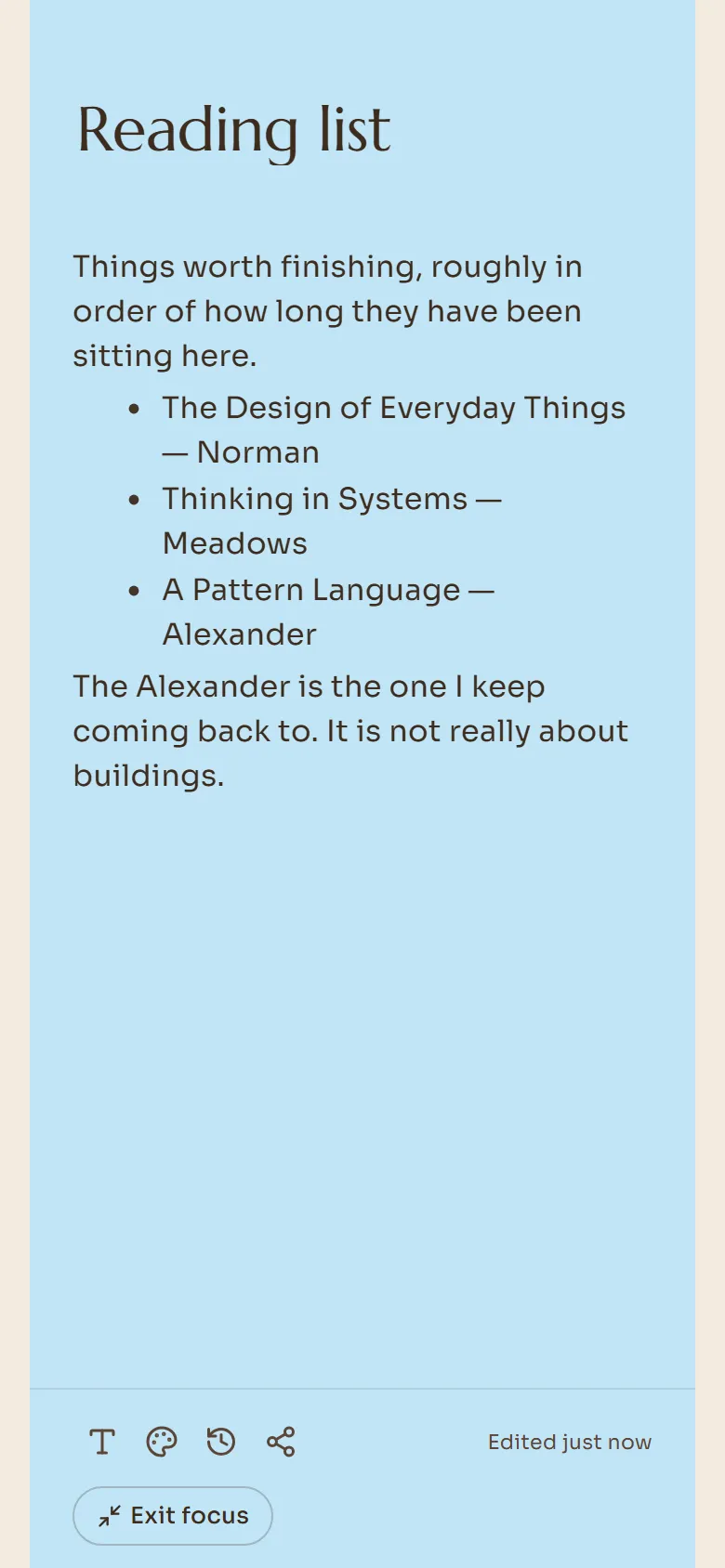
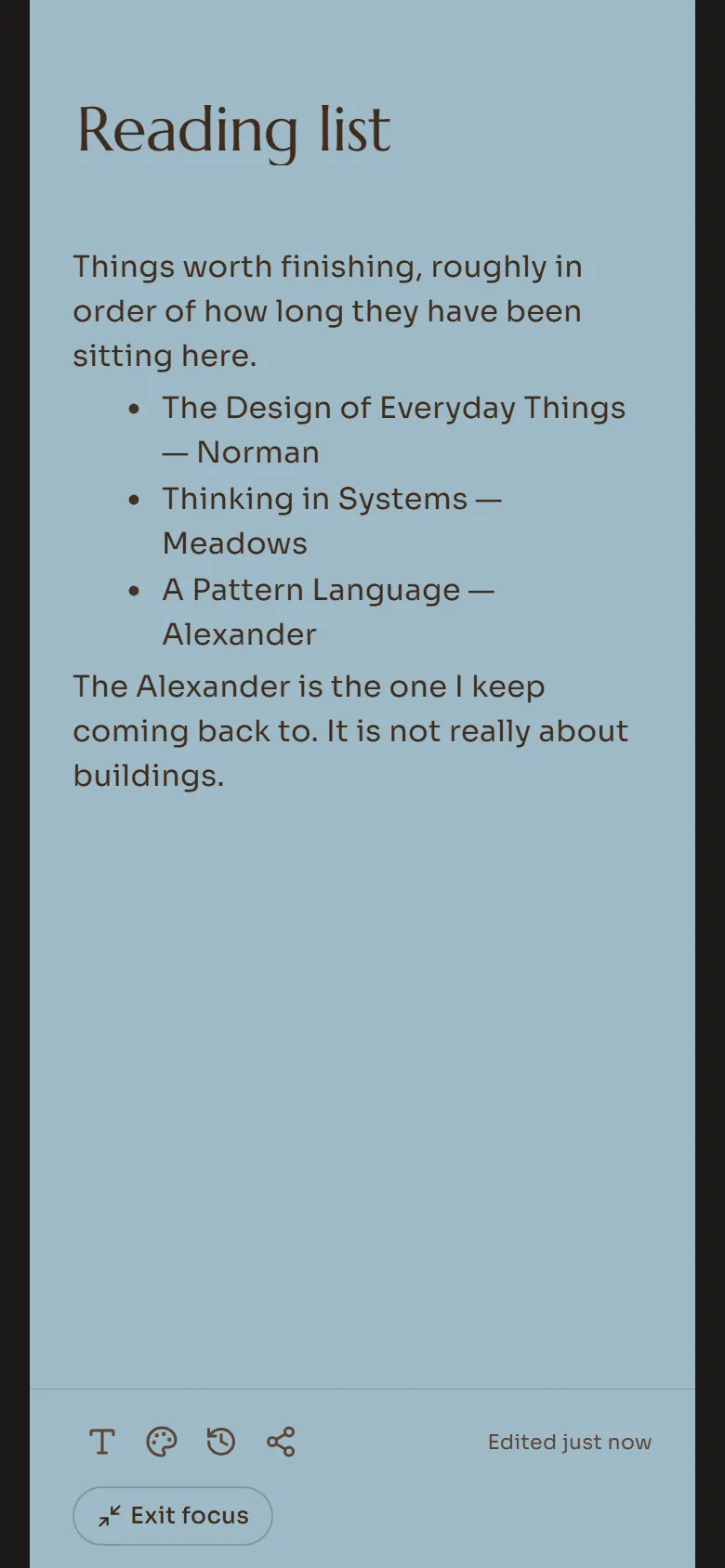
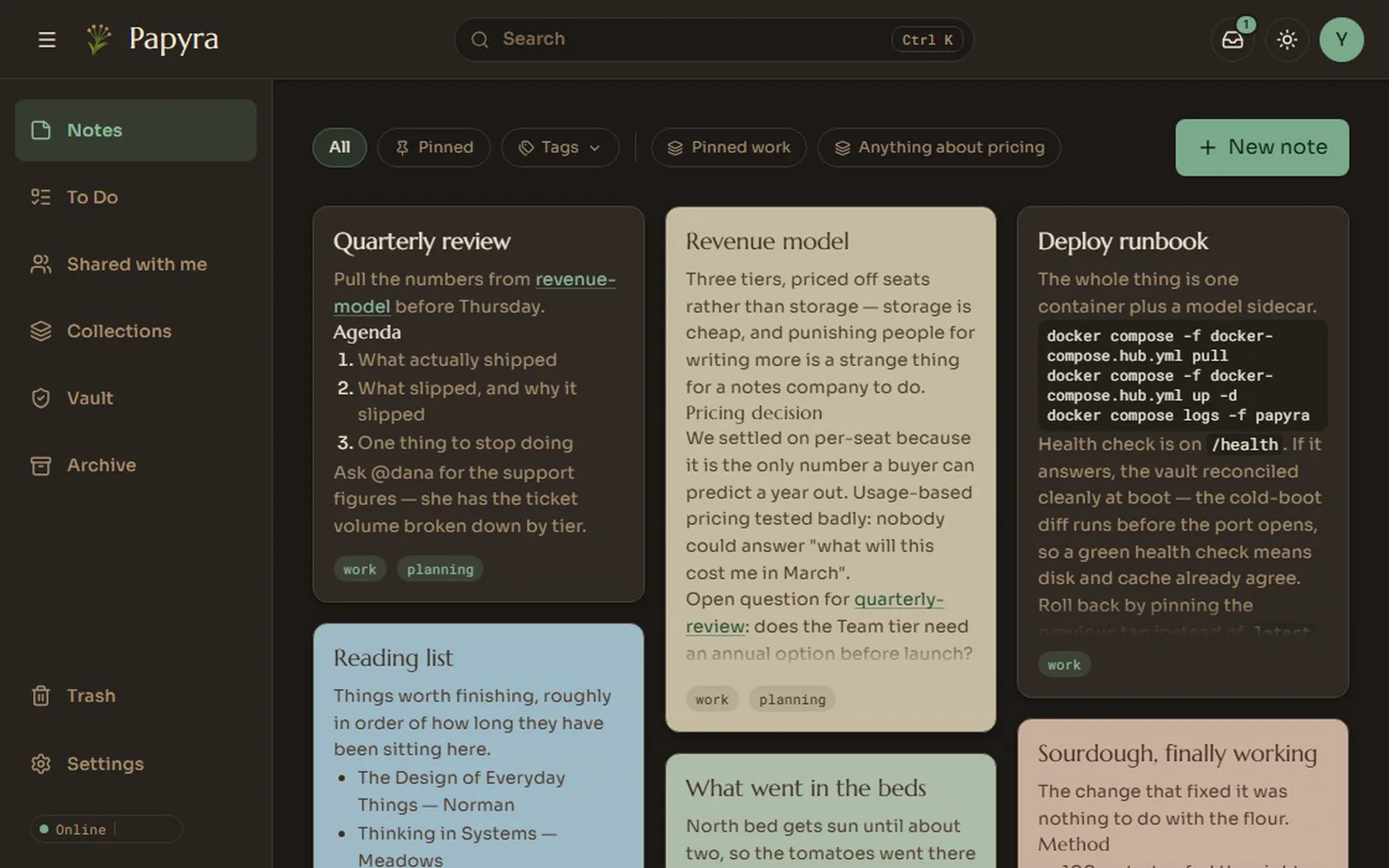
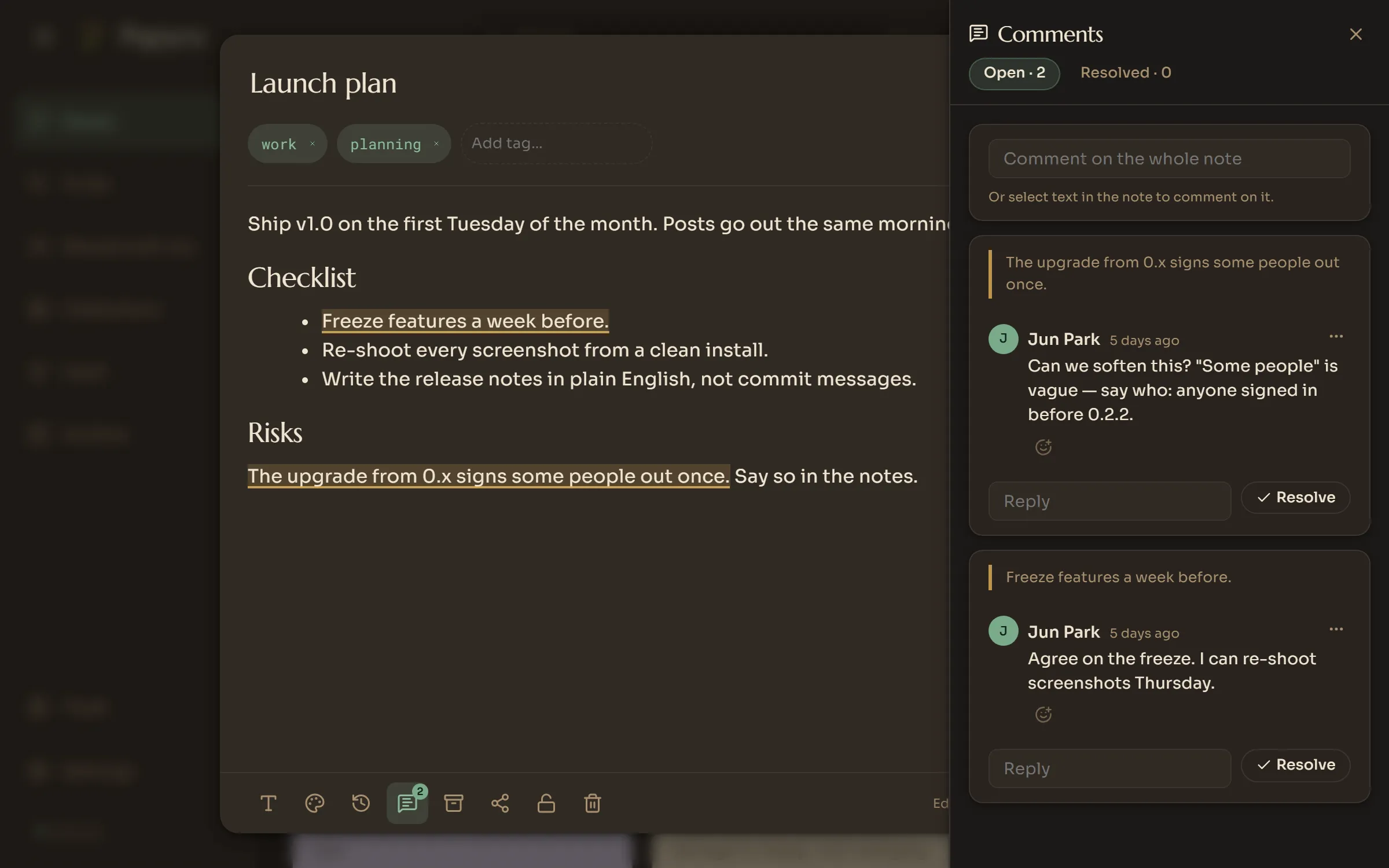
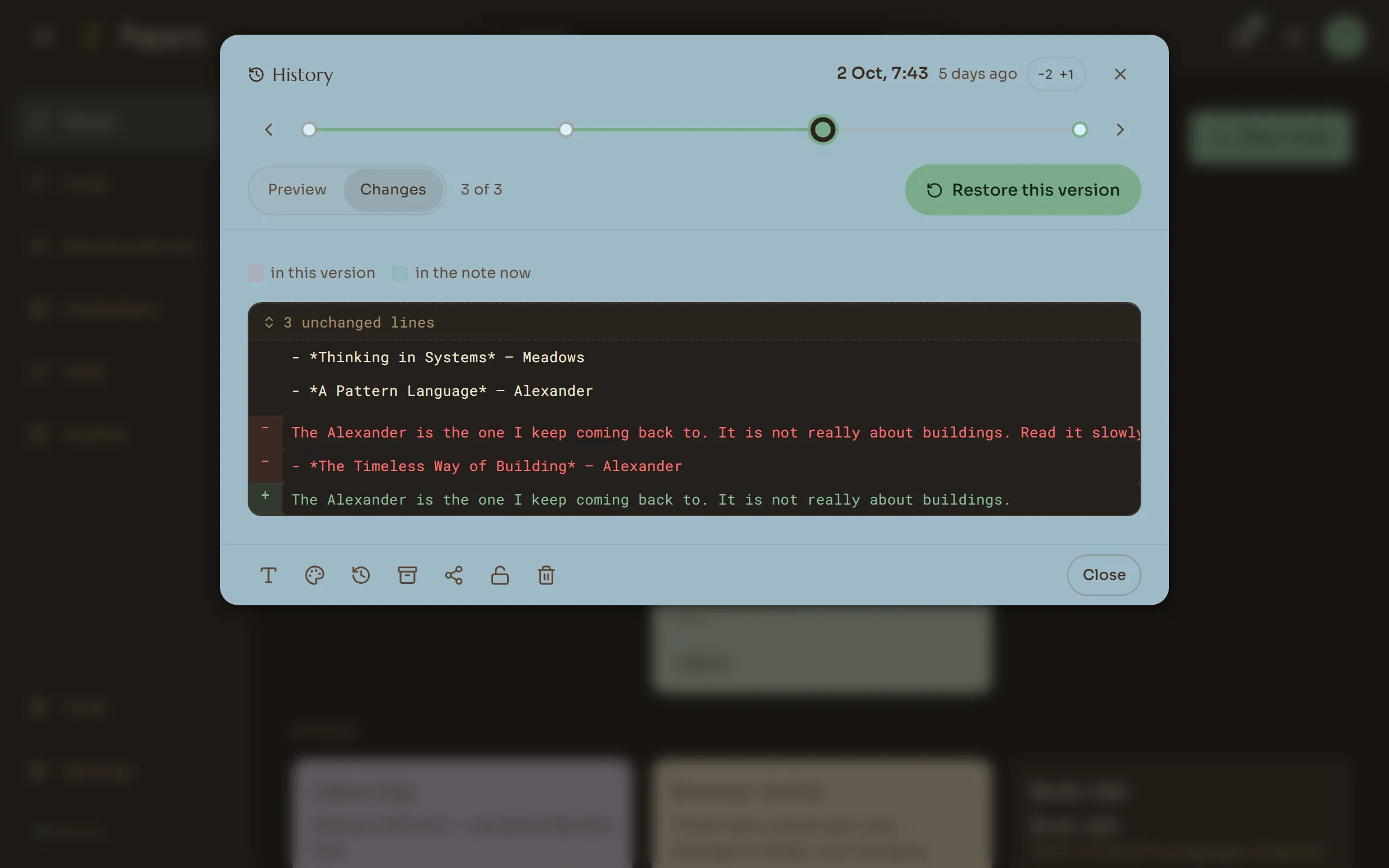
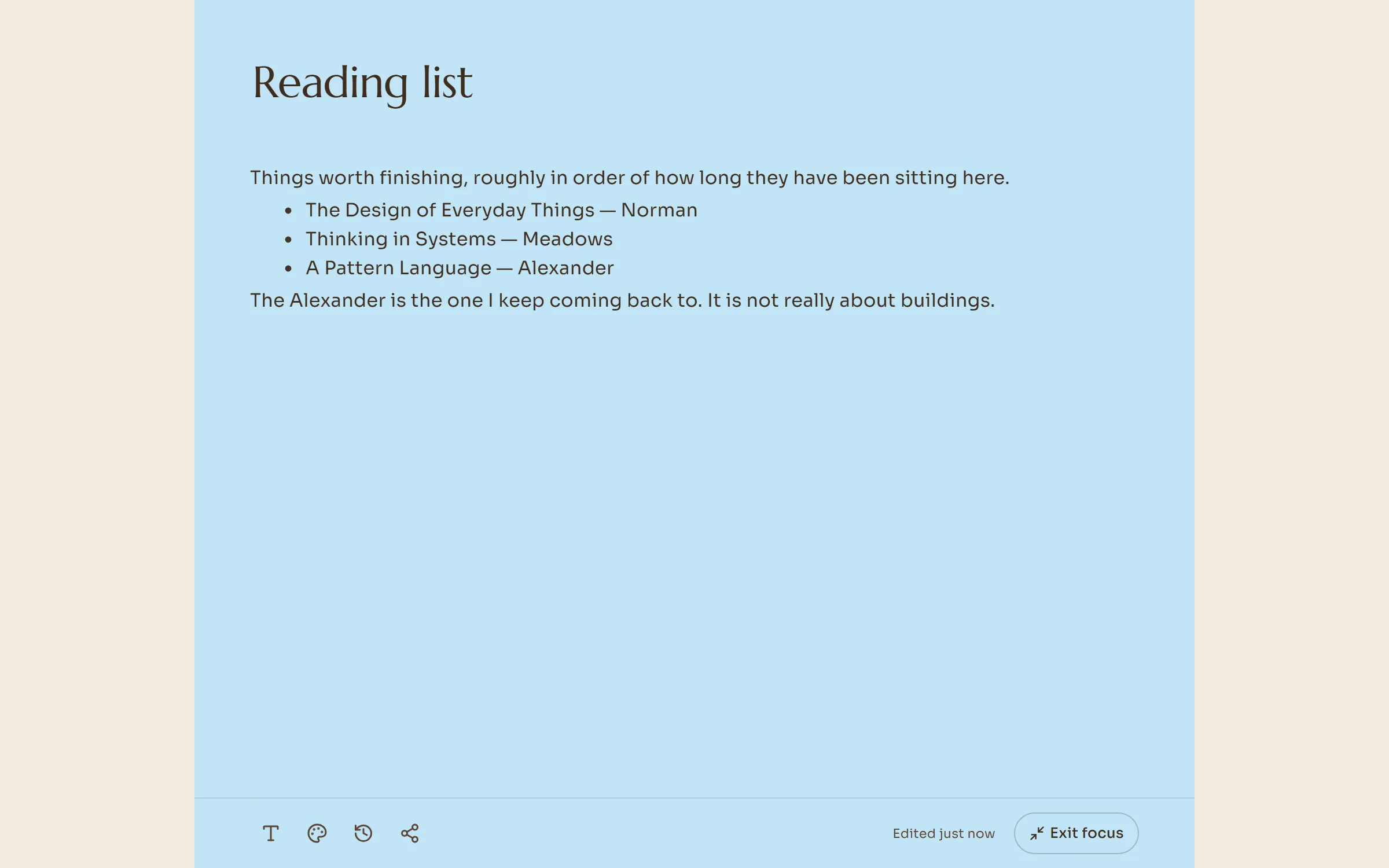
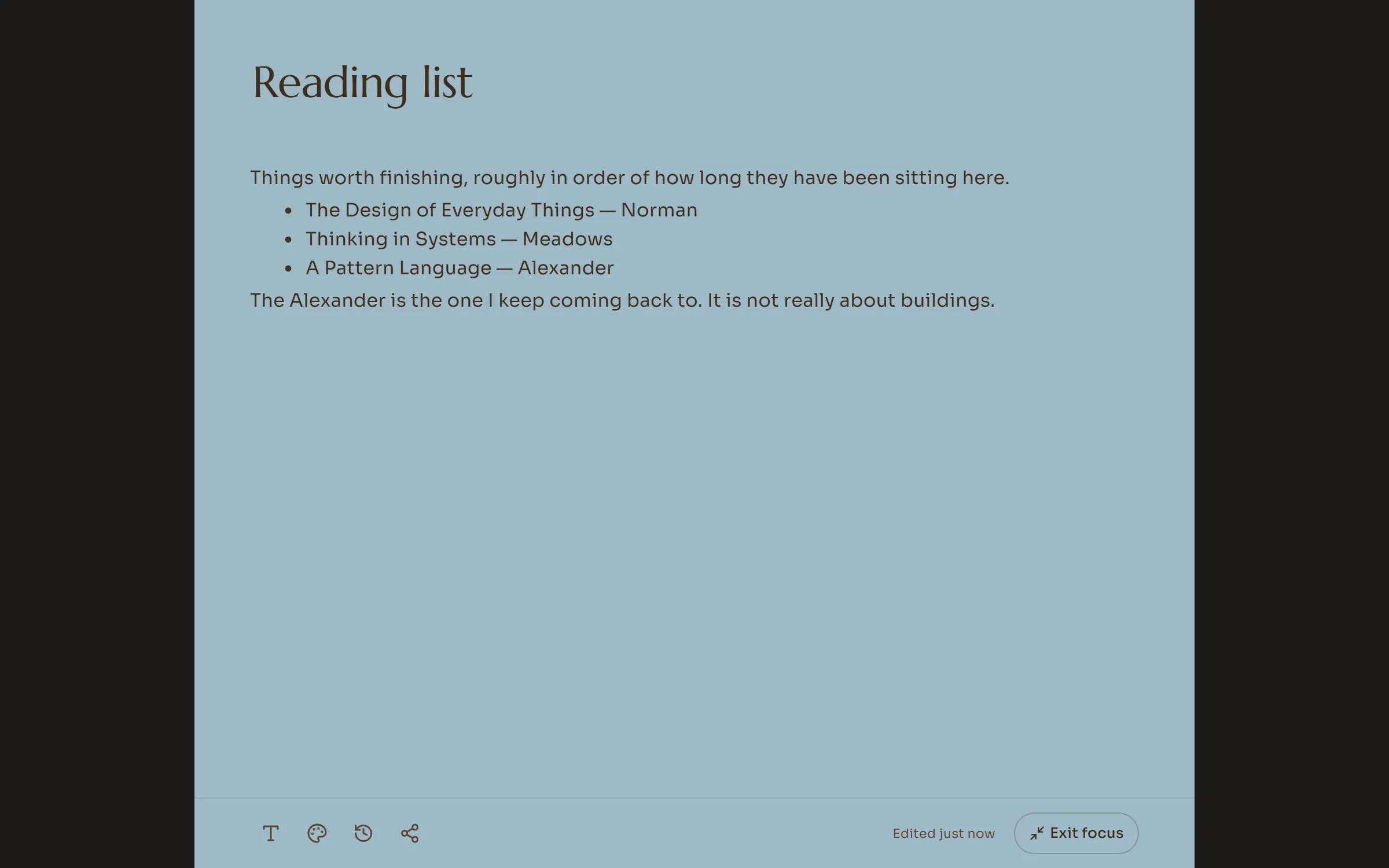
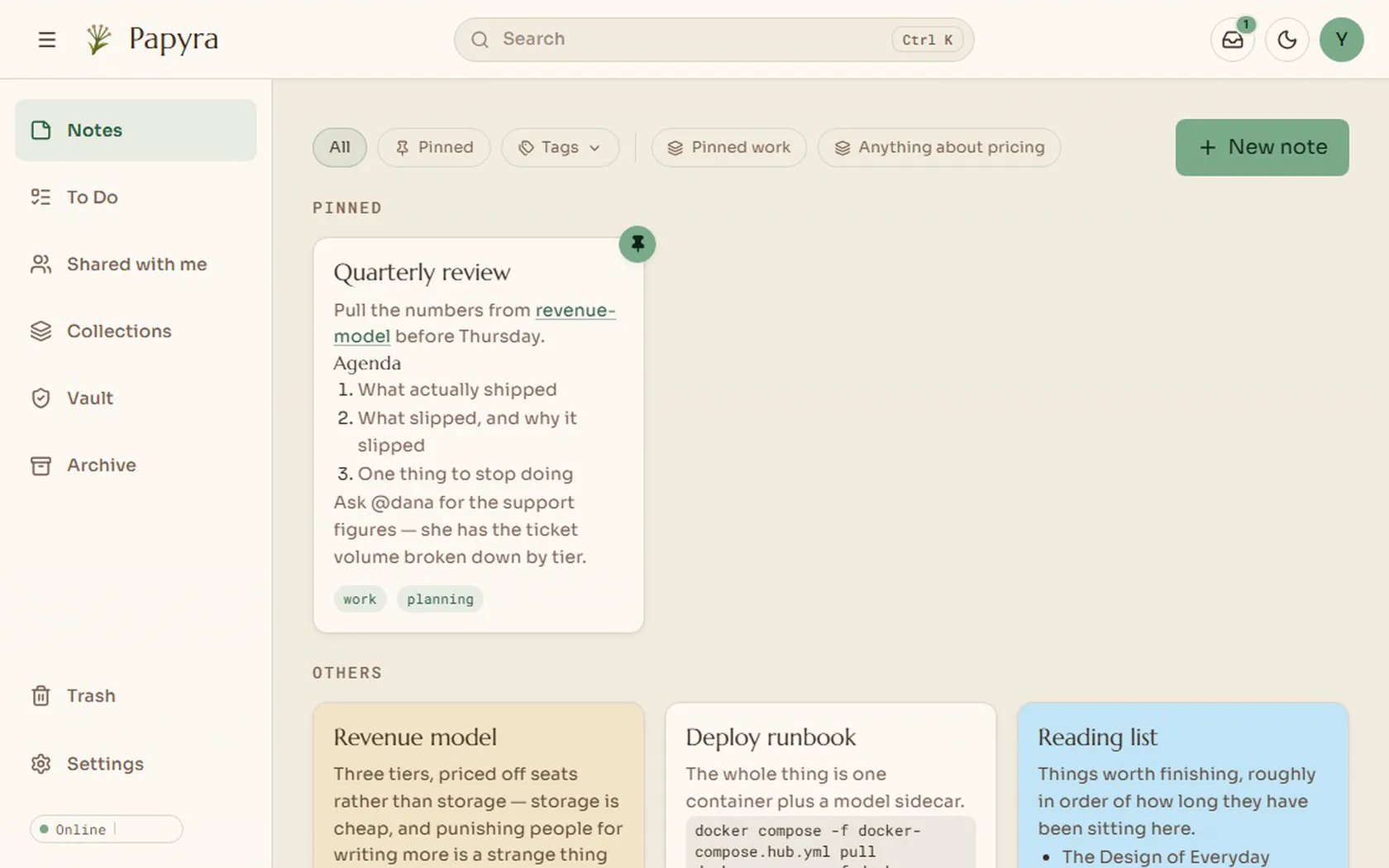
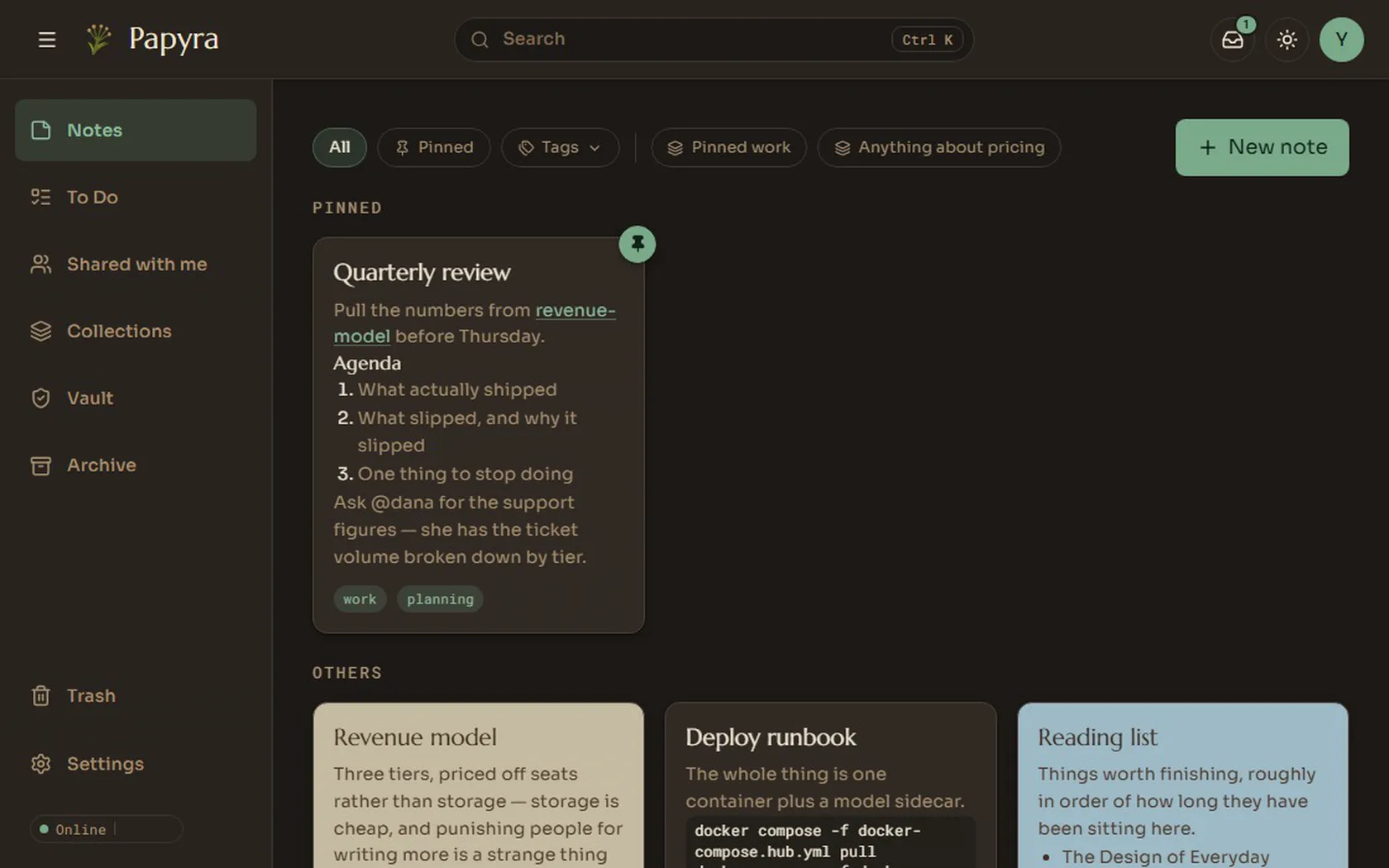
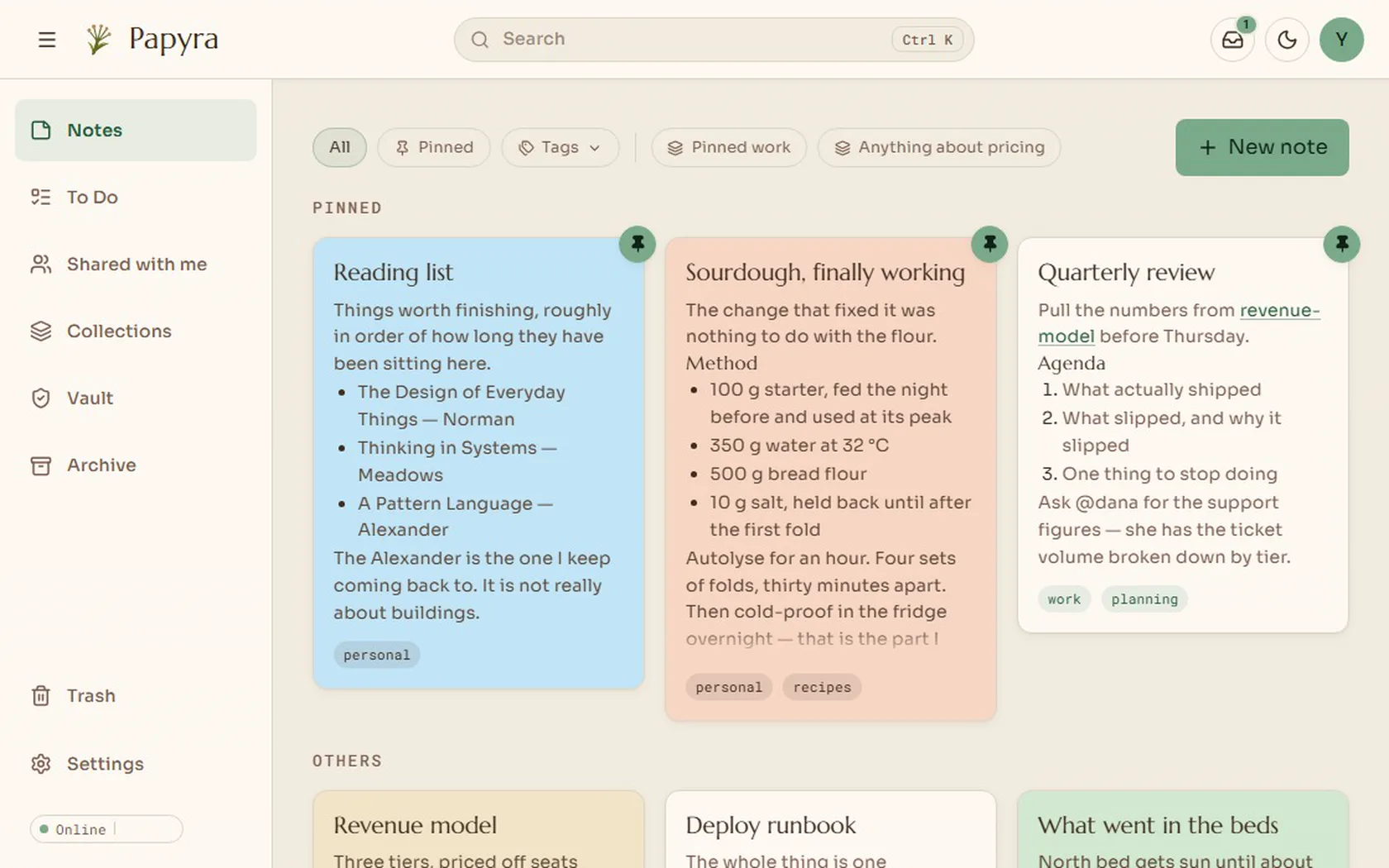
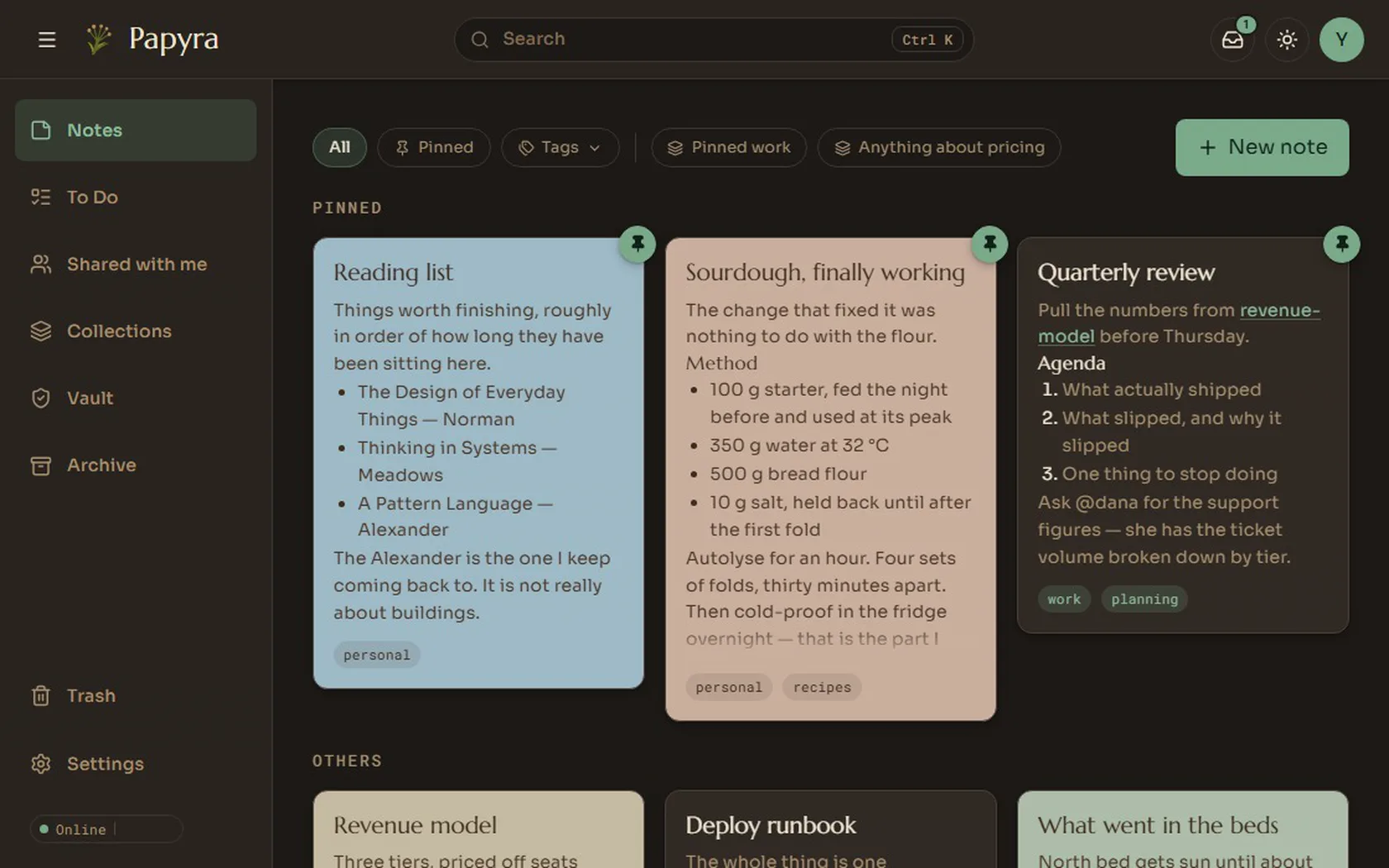
Warm paper by day. Calm graphite by night.
And the rest
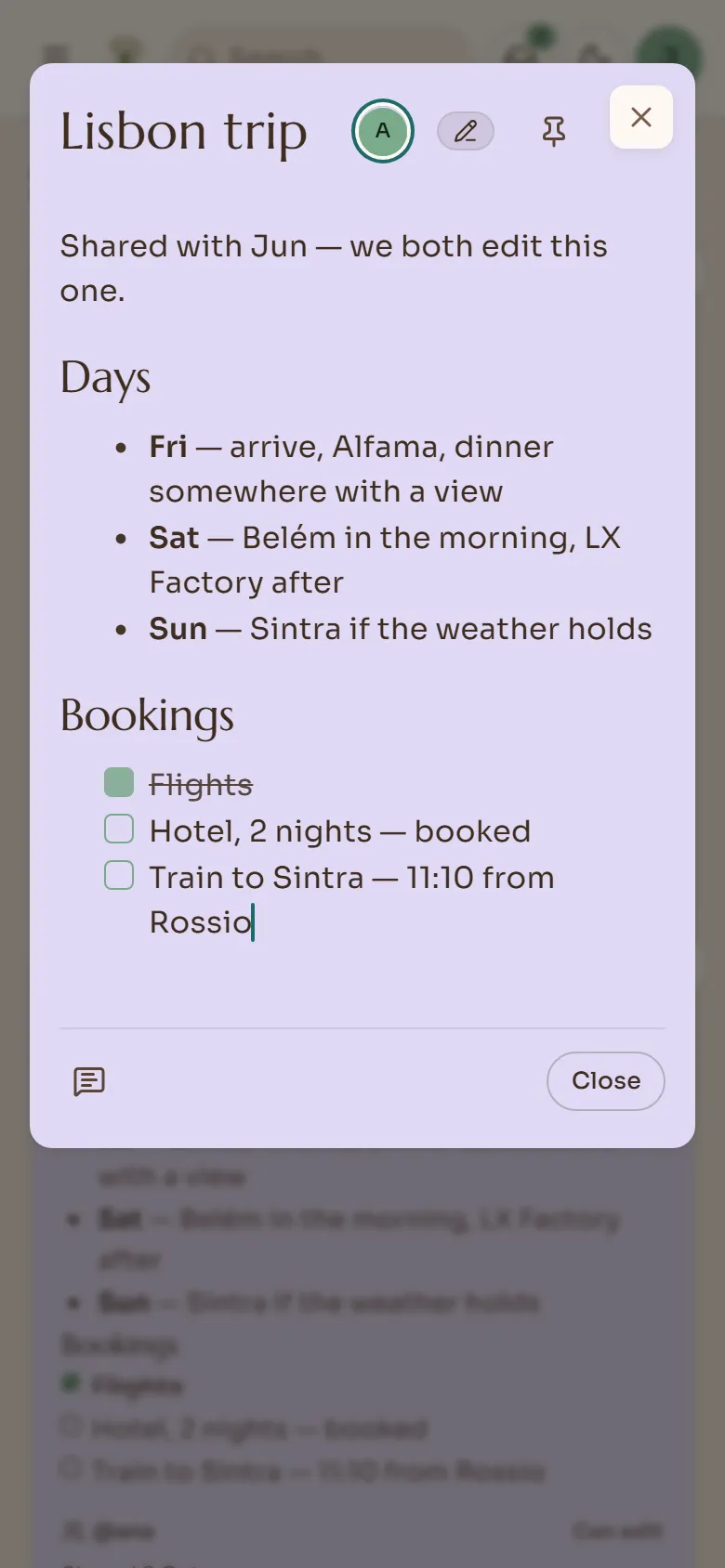
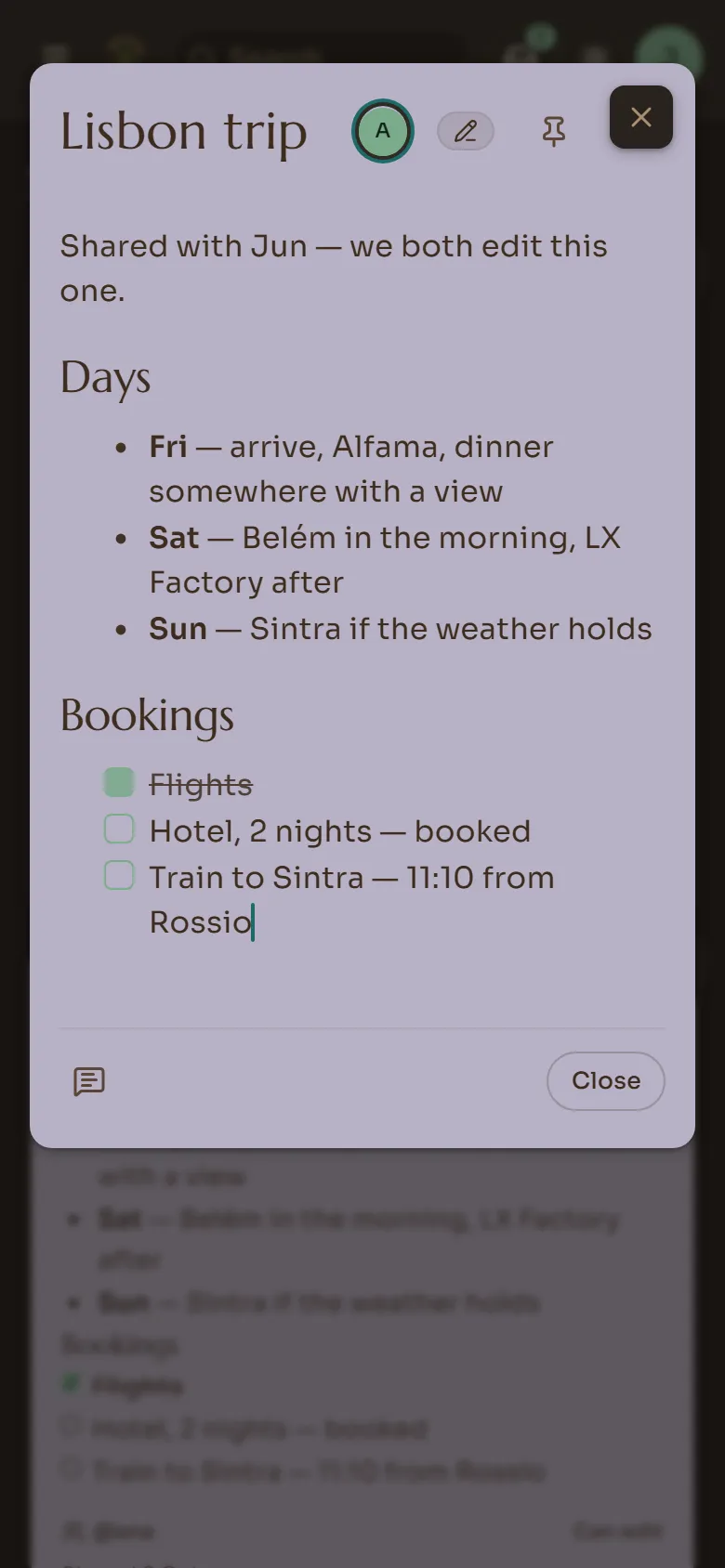
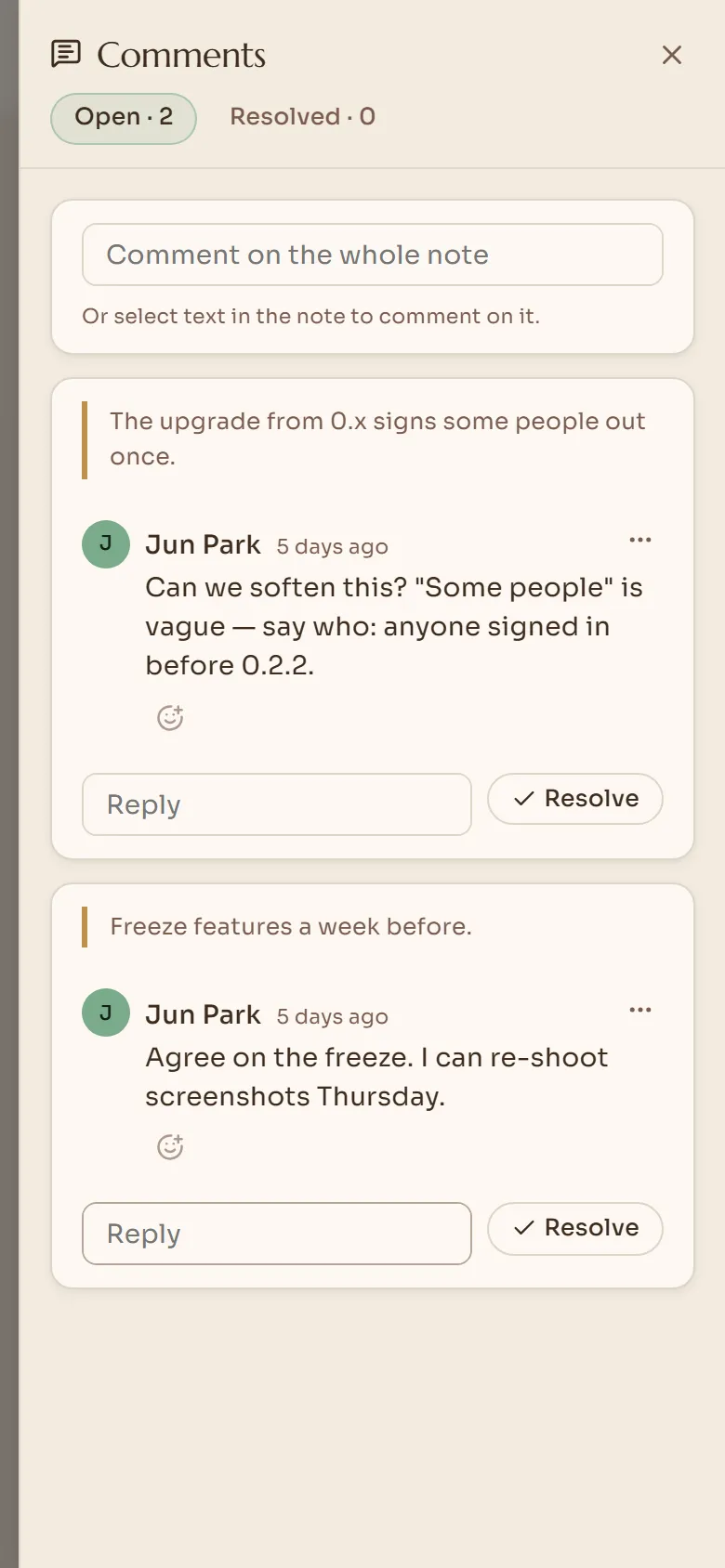
Edit shared notes together, cursors and all.
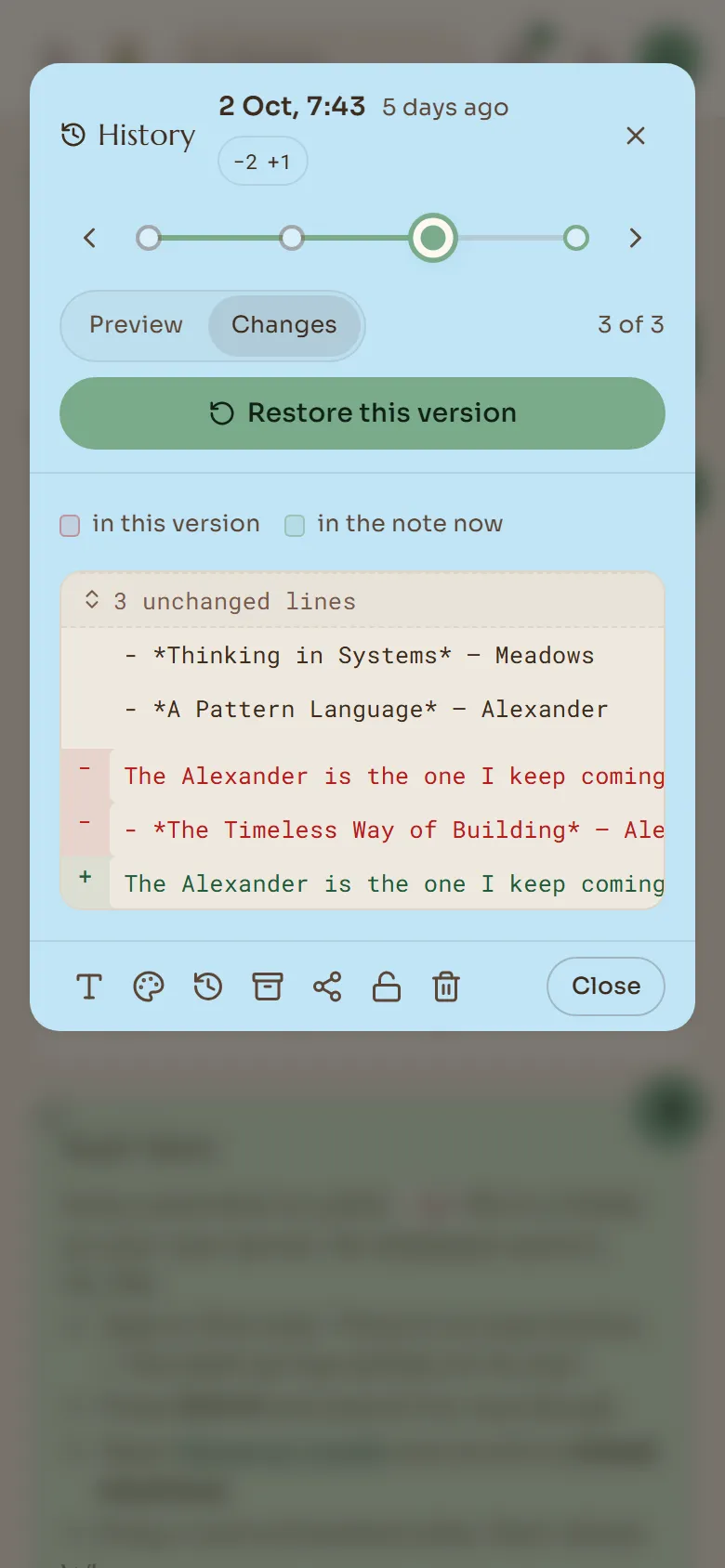
Every change kept. Restore any of them.
Type / for any block, [[ to link a note.
Keep writing on a plane. It syncs when you land.
Drop files in, or paste a map, video or page link.
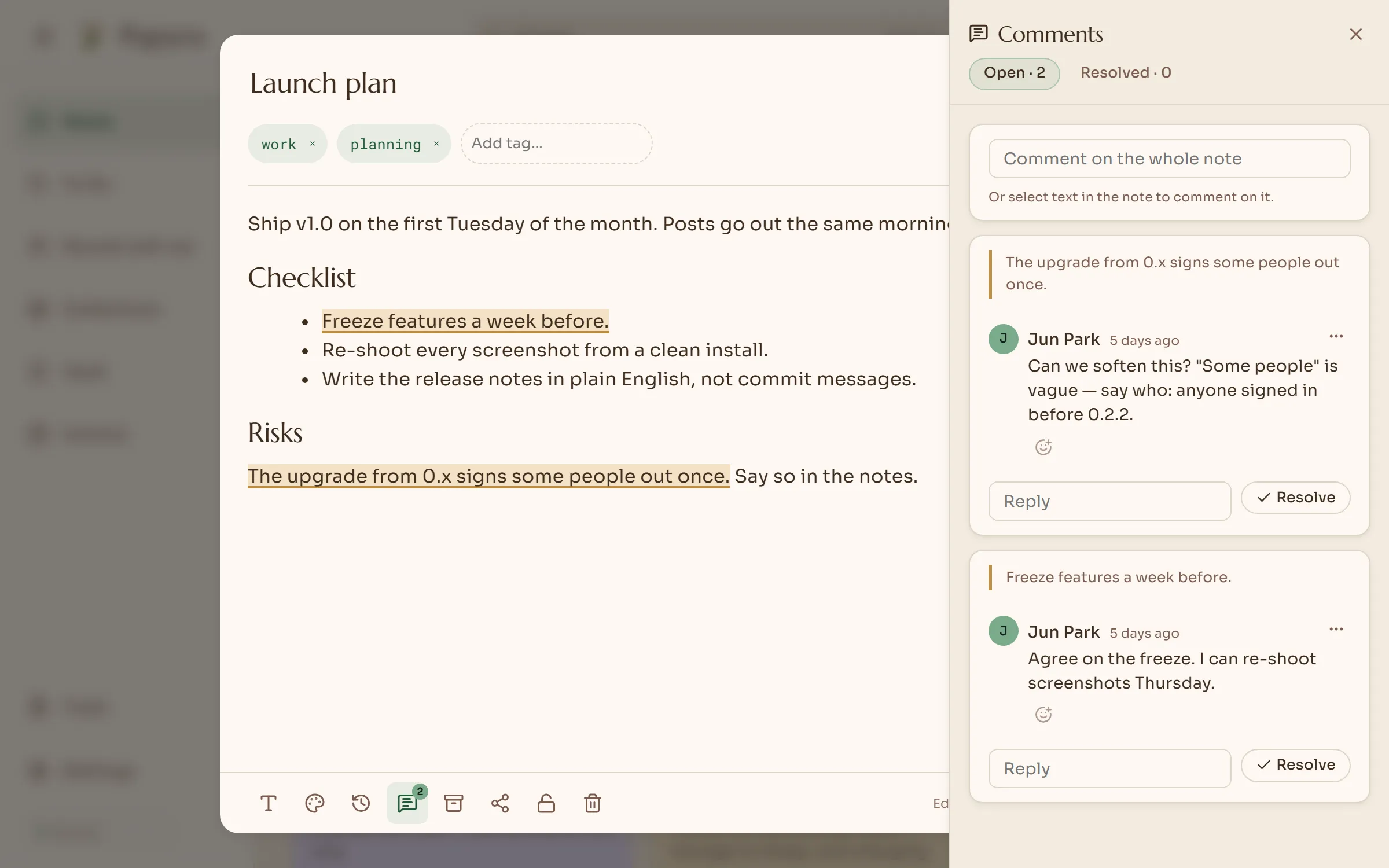
Share a note, @mention, reply in threads.
Fingerprint sign-in, authenticator codes, SSO.
Push your notes to a private Git repo, sealed.
Tags and filters that sort themselves.
Checklists that live beside your notes.
Install it on your phone, tablet and laptop.
Separate, private accounts on one server.
Move in tonight
Import your Takeout archive. Checklists, labels, colours and pins come with it.
Upload your vault. Links, frontmatter and attachments arrive intact.
Drag files onto the desk. That’s the whole import.
Re-import any time — Papyra never duplicates a note. How importing works
Private by default
Your notes never leave your server — unless you share one, back it up to Git, or email yourself a sign-in alert.
I’m a home-labber. Keeping my own data alive is hard enough — I have zero interest in storing yours.
Encrypted at rest. Opened with your PIN — or your fingerprint.
Passkeys, authenticator codes, SSO, and devices you can sign out.
Add your SMTP: new sign-ins, password changes, failed backups.
No CDNs, no trackers. Even the fonts come from your server.
Backups
A folder of Markdown on your server. Four easy ways to keep a copy somewhere else.
Papyra commits and pushes your notes to a private repo on a schedule — encrypted if you like, so even GitHub can’t read them. Full history, never force-pushed.
Your whole vault as a zip, whenever you want it.
A sealed backup only your password opens.
rsync, snapshots, your NAS backup — it all just works.
Roadmap
Ask your notes questions. Runs on your own hardware.
Windows, macOS and Linux, pointed at your server.
iOS and Android, offline-first.
Admin notifications where you already are.
Journal your life with everything Papyra does — photos, links, locked entries. One home for your notes, docs and days.
Next upDrop files into a note; preview PDFs in place, iPhone photos included.
v0.2.6Sign in with a fingerprint; authenticator codes for every account.
v0.1.19@mention someone to share a note; a tray tells you what changed.
v0.1.17Bring everything across; re-importing never duplicates a note.
v0.1.9See every note that links here; write with nothing else on screen.
v0.1.0Get started
Save one file, run one command, open your browser. The first account you create is the admin.
curl -O https://raw.githubusercontent.com/lyfie-org/papyra/main/docker-compose.hub.yml
docker compose -f docker-compose.hub.yml up -d

# then open http://localhost:8080
Open source
Papyra is free, GPL-licensed and built in the open. Every bug report, idea and pull request counts.
Like it? Star it. A star on GitHub is the easiest way to show support — and it helps other people find Papyra.
Questions
A free, open-source, self-hosted note-taking app. It is as simple as Google Keep, links notes like a wiki, and keeps every note as a plain Markdown file on your own server.
Yes. Papyra collects no telemetry, analytics or crash reports, and makes no third-party requests of its own — even its fonts come from your server. Your notes only leave it if you share one, set up a Git backup, or configure email alerts. Locked notes are encrypted on disk.
Yes. It is open source under the GNU GPL v3.0, with no paid tier, no licence key and no account with us.
Yes. Import a Google Keep Takeout archive — checklists, labels, colours and pins come with it — or upload an Obsidian vault with its links and attachments. Any Markdown file can also be dragged onto the desk.
Docker. Papyra is one container with one volume, and runs on amd64 and arm64 — a NAS, a Raspberry Pi or a small VPS. Install takes one command.
Yes. Papyra installs as an app on phones, tablets and computers, opens without a connection, and syncs offline edits when you are back. Native desktop and mobile apps are planned.
Nothing. They are ordinary Markdown files in a folder you own. Keep the folder and they stay readable in any text editor.